
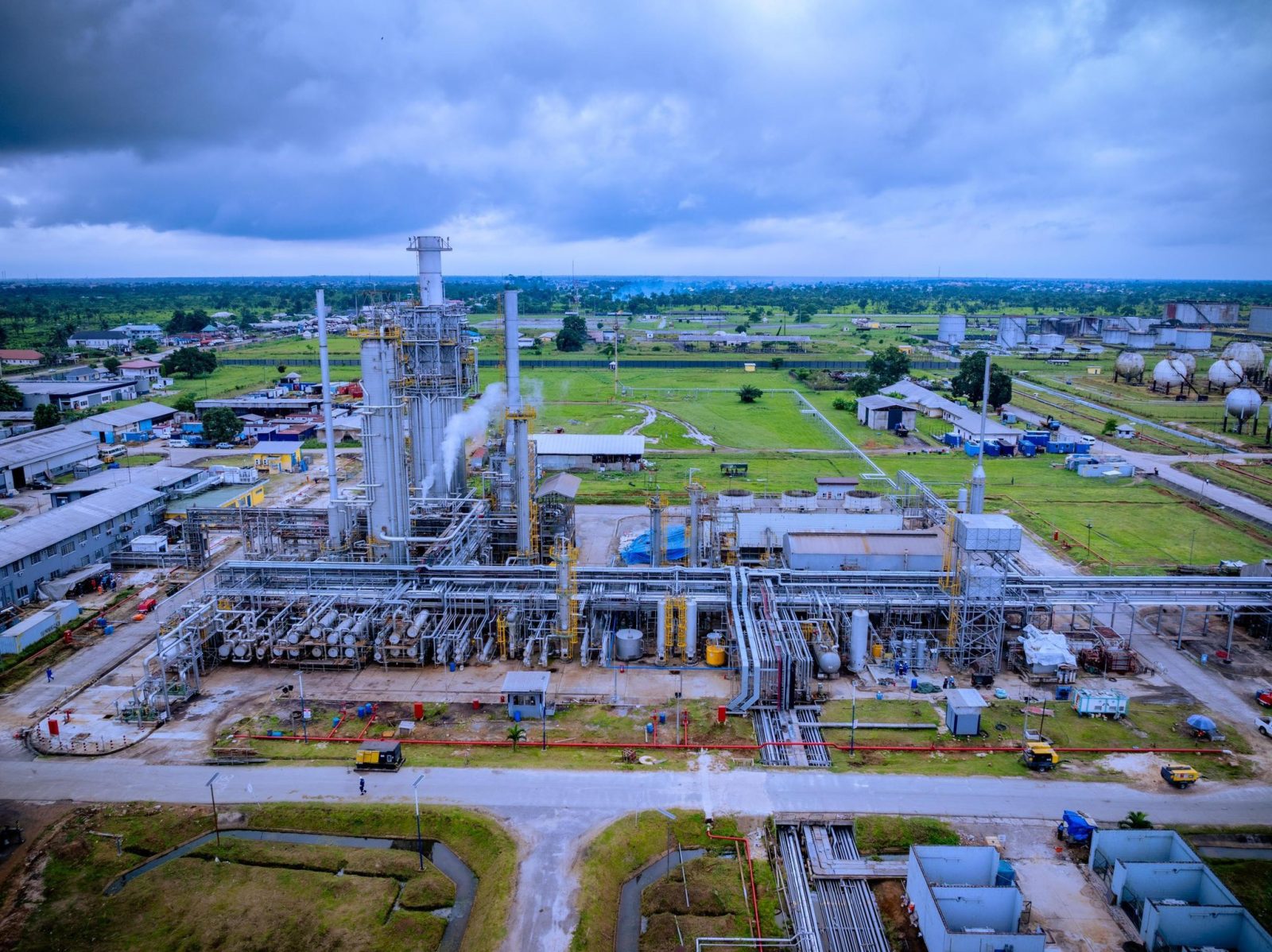

The Petroleum Products Retail Outlets Owners Association of Nigeria (PETROAN) has urged the Nigerian National Petroleum Company (NNPC) Limited to accelerate the rehabilitation of the Port Harcourt and Warri refineries, warning that escalating tensions between Iran and the United States could expose Nigeria to fresh petroleum supply disruptions.
The association said the growing geopolitical uncertainty surrounding the Middle East, particularly the possibility of prolonged disruption around the strategically important Strait of Hormuz, should serve as a wake-up call for Nigeria to strengthen its domestic refining capacity and reduce dependence on imported petroleum products.
National Public Relations Officer of PETROAN, Mr Joseph Obele, made the call in a statement, expressing concern that Nigeria remained vulnerable to international energy market shocks despite possessing substantial crude oil resources and having existing refinery infrastructure.
Obele noted that NNPC Limited signed a Memorandum of Understanding (MoU) on April 30, 2026, with two Chinese companies, Sanjiang Chemical Company Limited and Xinganchen (Fuzhou) Industrial Park Operation and Management Co. Ltd., for a proposed technical equity partnership covering the completion, operation, maintenance and expansion of the Port Harcourt and Warri refineries.
However, he expressed disappointment that 202 days after the agreement was signed, Nigerians were yet to see concrete implementation measures capable of returning the facilities to productive operations.
According to him, although plant assessments had reportedly been conducted on both refineries, the exercises must be followed by clearly defined implementation timelines, investment commitments and the commencement of rehabilitation and upgrade works.
“An MoU must not remain a ceremonial document. It must translate into measurable action, investment, infrastructure development and sustainable petroleum production,” he said.
The PETROAN spokesman therefore called on NNPC Limited to publicly disclose the implementation status of the Chinese partnership, including investment commitments, technical responsibilities, the rehabilitation roadmap and expected completion dates.
He also demanded the release of the plant assessment reports for both refineries, alongside clearly defined performance targets and accountability mechanisms to ensure that the partnership achieves its objectives.
The warning comes amid renewed concerns over the vulnerability of international petroleum supply chains to geopolitical instability, particularly in the Middle East. The Strait of Hormuz is a critical global energy transit route, and disruptions to shipping through the waterway could affect crude oil and petroleum product supplies, freight charges and international energy prices. Recent reports of attacks on vessels in the strait have further heightened concerns over maritime security.
Obele warned that any prolonged disruption could have far-reaching consequences for Nigeria, given its continued reliance on imported refined petroleum products. He said the effects could extend beyond the oil and gas industry to transportation, food prices, manufacturing, businesses and household incomes.
He maintained that Nigeria’s vulnerability to external supply shocks underscored the urgency of restoring its domestic refining capacity.
Meanwhile, developments surrounding the proposed partnership indicate that the process is yet to reach the stage of a definitive investment and operating agreement.
In an October 14 report, The Punch quoted NNPC’s Chief Corporate Communications Officer, Andy Odeh, as saying that the company was awaiting technical assessment reports from the Chinese firms following approximately three months of on-site assessments conducted alongside NNPC’s technical teams.
According to the report, the assessments were expected to establish the technical requirements and investments needed to make the refineries commercially competitive.
NNPC also clarified that the April 30 MoU was a preliminary framework rather than a final investment or operating agreement, stressing that any further arrangement would depend on commercial viability and the outcome of the technical evaluations.
The clarification provides important context to PETROAN’s demand for transparency and concrete implementation measures.
Beyond the national energy security concerns, Obele, an indigene of Ogoni, highlighted the economic and social implications of the prolonged inactivity of the Port Harcourt Refinery for its host communities.
He lamented that thousands of Ogoni indigenes and other residents whose livelihoods depend directly or indirectly on the facility had suffered economic hardship following its prolonged shutdown.
According to him, the refinery’s inactivity has weakened employment opportunities, commercial activities and other sources of livelihood, leaving many families and businesses struggling.
He argued that restoring the facility to productive operations would create employment opportunities, revive local businesses and rebuild economic confidence among communities that have hosted petroleum operations for decades.
Obele therefore urged NNPC to give special consideration to the social and economic importance of restarting the Port Harcourt Refinery as part of efforts to strengthen relations between the petroleum industry and its host communities.
He also called for stronger strategic petroleum product reserves and improved domestic supply preparedness to protect the country against possible disruptions in international markets.
“NNPC must recognise that refinery development is not merely a commercial undertaking; it is a critical component of Nigeria’s national energy security,” he said.
He maintained that Nigeria could no longer afford to remain heavily dependent on external refining capacity when its own refineries had yet to achieve their expected operational potential.
“Nigeria has the crude oil. Nigeria has the market. What Nigerians urgently need is functional domestic refining capacity. The time for implementation is now. Another international petroleum crisis should not find Nigeria unprepared,” he added.
The PETROAN intervention has renewed attention on the future of Nigeria’s state-owned refineries, particularly the Port Harcourt facility in Rivers State, where residents and businesses have long anticipated the economic benefits of a fully operational refinery.












Leave a comment