
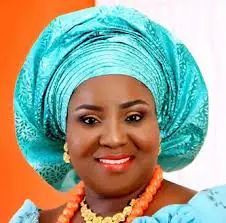

Former Acting Managing Director of the Niger Delta Development Commission (NDDC), Ibim Semenitari, has challenged three Rivers State governorship candidates to present concrete policy proposals and explain how they intend to tackle the state’s development challenges ahead of the 2027 governorship election.
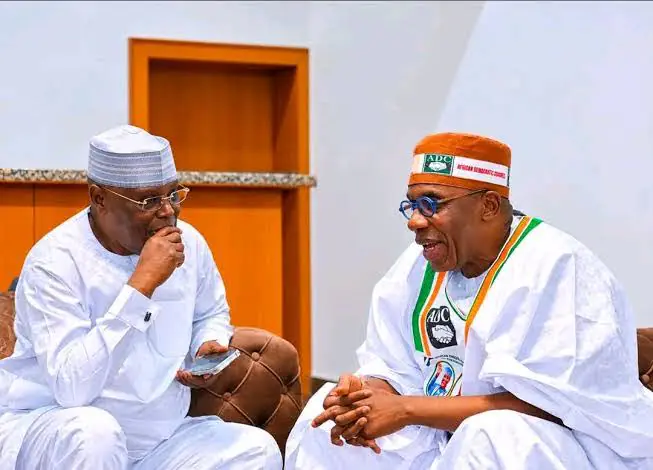
The candidates are Dumo Lulu-Briggs of the Nigeria Democratic Congress (NDC), O.K. Chinda of the All Progressives Congress (APC) and Gabriel Pidomson of the African Democratic Congress (ADC).
Semenitari, in a statement titled “Gentlemen, What Exactly Is on the Table?”, said Rivers people deserved more than campaign rhetoric, political slogans and declarations of electoral strength, insisting that those seeking to govern the state must demonstrate a clear understanding of its challenges and offer practical solutions.
She challenged the candidates to explain what they intended to do, how they planned to achieve their objectives, the estimated costs of their programmes and their proposed sources of funding.
According to her, political campaigns should focus on policies, governance and measurable development objectives rather than personalities, political affiliations and claims of popularity.
She said the electorate needed to understand what each candidate intended to bring to governance beyond the ambition of occupying the Brick House, the seat of the Rivers State Government.
“If noise were a development plan, Rivers State would have very little left to build. We would have uninterrupted electricity, flourishing businesses and schools so good that nobody entrusted with public education would feel the need to educate their children elsewhere,” she stated.
On employment, the former NDDC chief demanded that the candidates identify the sectors in which they intended to create jobs and explain the policies government would introduce to enable businesses to grow and employ more people without political considerations.
She also challenged them to provide specific proposals for improving education, particularly access to quality learning for children living with disabilities whose parents could not afford specialised educational services.
On healthcare, environmental protection and infrastructure, Semenitari called for practical strategies to improve healthcare delivery, protect livelihoods threatened by environmental degradation and address the longstanding developmental challenges confronting riverine communities.
She further demanded transparency and accountability in public expenditure, urging the candidates to explain how citizens would monitor government performance and obtain information on public contracts, project costs and implementation outcomes.
“Please spare us the manifesto in which every sentence begins with ‘we shall’ and accountability is postponed until further notice,” she said.
Beyond the immediate contest for political power, Semenitari raised concerns about the political and institutional legacy the present generation of leaders would leave for future generations.
She warned against the perpetuation of godfatherism, prebendal politics, political divisions and the use of public office as an avenue for rewarding favoured interests.
Questioning the legacy of the present political generation, she asked what Rivers leaders intended to bequeath to their children, warning against a political culture in which public resources became the preserve of a privileged few and young people were continually drawn into the conflicts of older politicians.
The award-winning journalist also challenged members of her generation, particularly those in their 50s and 60s who had occupied public offices or wielded political influence, to look beyond personal ambition and consider their responsibility to the future of the state.
“At our age, another title ought to require a better explanation than ‘it is my turn’. A turn to do what? And when your turn ends, what will remain?” she queried.
Semenitari urged Lulu-Briggs, Chinda and Pidomson to openly defend their records, acknowledge their shortcomings and subject themselves to public scrutiny through an open debate where voters could question their policies, competence and capacity to govern.
“You seek responsibility for our common future. We are entitled to interview you for it,” she declared.
She maintained that Rivers voters must distinguish between politicians genuinely committed to building a better society and those primarily interested in political applause, loyalty and the preservation of their respective political camps.
“Our children deserve an inheritance better than our quarrels. That is what must determine our votes,” she added.
Concluding her statement, Semenitari insisted that the governorship candidates must move beyond political declarations and place substantive development proposals before the electorate. “The die is cast. Gentlemen, put something on the table,” she declared.




Leave a comment