
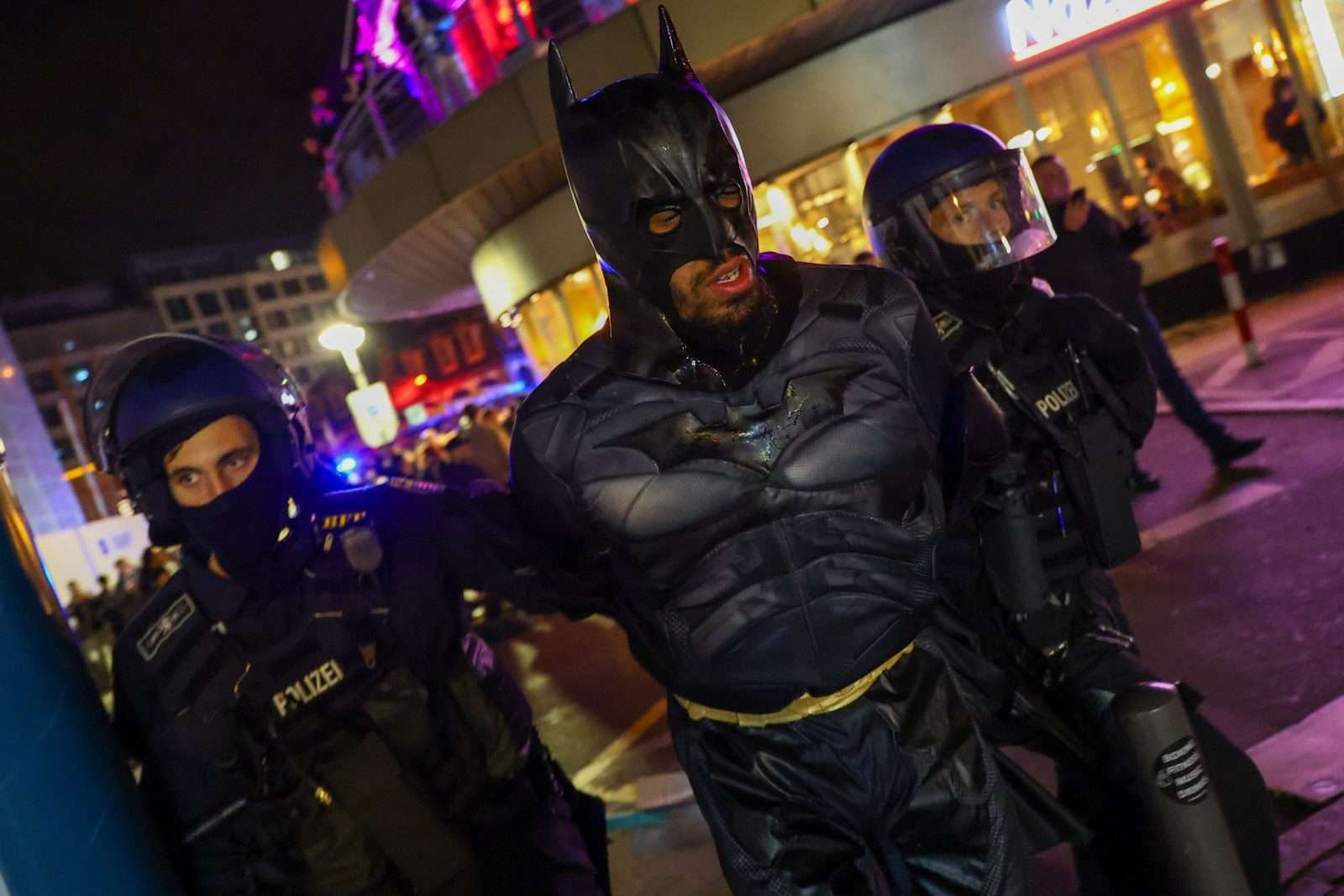

Tens of thousands of young people took to the streets across Germany on Saturday, October 31, 2026, to protest against rising living costs, inadequate investment in education and plans to introduce compulsory military service, as demonstrations in several cities descended into violence, vandalism and looting.
Among those arrested was a demonstrator dressed as the fictional superhero Batman, who was detained in Frankfurt as police struggled to contain disturbances in the city centre.
The demonstrations, organised by the youth-led campaign group Gen Z regelt (Gen Z Takes Charge), were held in 34 German cities, including Berlin, Frankfurt, Munich and Hamburg. The movement seeks greater government investment in education and public services, affordable living conditions, social justice and an end to compulsory military service.
Police figures indicated that approximately 18,000 people participated in demonstrations across Frankfurt, Munich and Berlin, while organisers put the combined attendance at about 36,000. The campaign group subsequently estimated that approximately 120,000 people participated in protests nationwide, considerably below its initial expectations.
In Frankfurt, Germany’s financial capital, the demonstrations deteriorated into violent confrontations, with shops reportedly looted, commercial properties vandalised and emergency services attacked.
Police reported that protesters smashed shop windows, set off pyrotechnics and threw Molotov cocktails at emergency personnel. Several streets in the city centre were affected, prompting security operatives to urge residents and visitors to avoid the affected areas.
The situation became particularly tense around the city’s Zeil shopping district, where specialist police units were deployed to restore order. Authorities also reported numerous arrests as officers attempted to disperse violent groups.
In Berlin, disturbances were also reported, including attacks on police officers involving bottles, eggs and fireworks. Authorities subsequently confirmed that 56 people had been arrested in connection with various offences, while 27 police officers sustained minor injuries.
However, the main demonstration organised by Gen Z regelt at the Brandenburg Gate, which attracted approximately 5,000 participants according to police estimates, proceeded largely without incident.
Germany’s authorities had anticipated possible disturbances ahead of the demonstrations, particularly following violent protests elsewhere in Europe. They had warned that extremist groups could exploit the movement to advance their own agendas.
Despite the violence, the organisers maintained that their campaign was intended to be peaceful and distanced themselves from criminal activities committed during and after the demonstrations.
Speaking at the Berlin rally, a spokesperson for the movement, Lina Friedrich, said the protesters were demonstrating for peace and freedom rather than war and coercion.
She stressed the need for improved funding for Germany’s health and education systems, adding that young people should not be compelled to undertake military service without having a say in decisions affecting their future.
The movement’s demands also reflect growing dissatisfaction among young Germans over the rising cost of living, deteriorating educational infrastructure and concerns that government spending priorities are placing an unfair burden on younger generations.
In an update published on Sunday, November 1, German broadcaster Tagesschau reported that the nationwide protests attracted considerably fewer participants than initially anticipated by the organisers, despite the mobilisation of supporters across more than 30 cities.
The broadcaster also reported that the campaign was already considering further activities, including demonstrations at schools and universities between November 2 and 6, as well as participation in an international youth strike scheduled for November 20.
The organisers have also indicated plans for another nationwide demonstration on November 14.
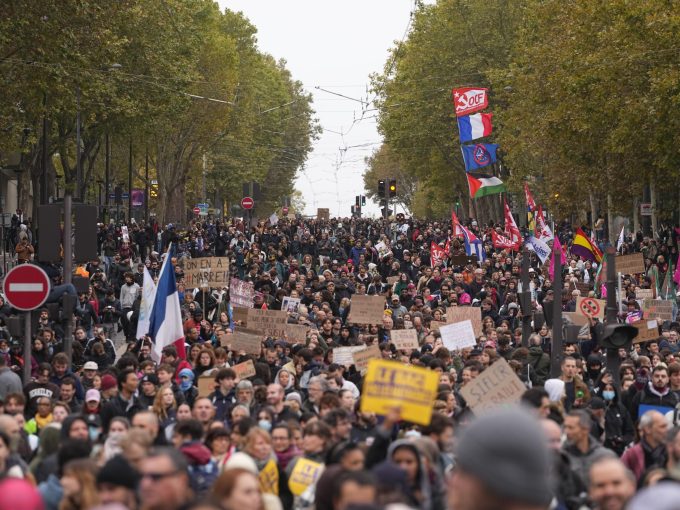
The German protests form part of a broader wave of youth-led demonstrations sweeping across Europe, particularly in France, where dissatisfaction with government policies, economic pressures and social conditions has also triggered widespread unrest.
For Germany, the demonstrations represent a growing challenge for policymakers, as an increasingly vocal younger generation demands greater economic opportunities, improved public services and a meaningful role in decisions shaping its future.








Leave a comment