
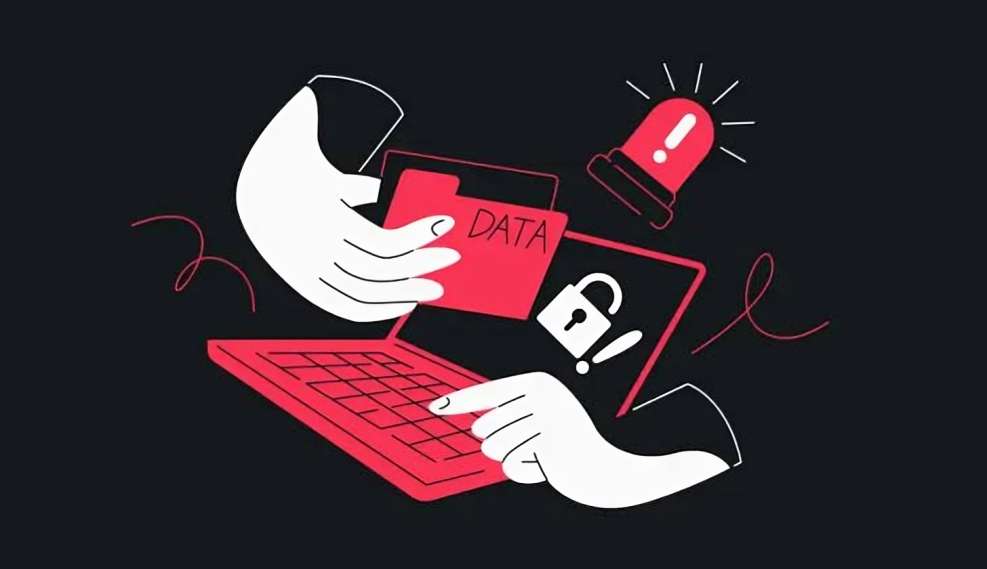

Most people don’t get hacked because someone cracked a sophisticated code. They get hacked because of small, everyday habits — clicking the wrong link, reusing the same password everywhere, ignoring a warning sign that, in hindsight, was obvious. These mistakes aren’t limited to email or banking apps; they show up anywhere an account exists, from social media to work logins to the websites people manage themselves.
Phishing and Spam: The Oldest Trick Still Works
Phishing has been around for decades, yet it remains one of the most effective ways attackers get into accounts — precisely because it doesn’t attack the system, it attacks the person using it.
A phishing attempt usually looks like a normal message: an email “from your bank” asking you to verify your account, a text claiming a delivery failed and needs a click to reschedule, or a message that appears to come from a colleague asking for an urgent favor. The goal is always the same — get you to click a link, open an attachment, or hand over login details without stopping to think.
A few habits make a real difference:
- Slow down before clicking. Urgency is the biggest red flag. Messages that demand immediate action — “your account will be suspended in 24 hours,” “click now to avoid a fee” — are designed to short-circuit careful thinking.
- Check the sender, not just the name. A display name can say “Bank Support” while the actual email address is a string of random characters at an unfamiliar domain.
- Hover before you click. On a computer, hovering over a link shows the real destination at the bottom of the screen. If it doesn’t match where the message claims to be sending you, don’t click.
- Verify through a separate channel. If a message claims to be from your bank, employer, or a service you use, go directly to the official website or call a known number — don’t use the contact details in the suspicious message itself.
Spam filters catch a lot, but not everything. Attackers regularly find ways to slip past filters, especially when they’ve done a little research on their target first (a tactic known as spear phishing). No filter is a substitute for a healthy pause before you act on an unexpected message.
Weak Passwords: Convenience That Costs More Later
The second everyday mistake is one almost everyone is guilty of at some point: passwords that are too simple, too predictable, or reused across too many accounts.
The most common patterns attackers rely on:
- Reused passwords. Using the same password across email, social media, and shopping sites means one breach anywhere can unlock everything else. When a company gets hacked and passwords leak, attackers test those same credentials on other popular sites — a technique called credential stuffing.
- Predictable patterns. Birthdays, pet names, “password123,” or a favorite team followed by a year are among the first things automated cracking tools try.
- No second layer of protection. A password alone is often not enough. Two-factor authentication (2FA) — a code sent to your phone or generated by an app — adds a second barrier that stops most automated attacks even if a password does leak.
The fix doesn’t require memorizing dozens of complex strings. A password manager can generate and store unique passwords for every account, so the only thing you need to remember is one strong master password. Combined with 2FA wherever it’s offered, this alone closes off the majority of the easy paths attackers rely on.
The Bigger Picture
None of this requires technical expertise — just a shift in habit. Treat unexpected messages with a healthy dose of suspicion, and treat passwords as something worth investing a little effort into rather than an afterthought. The people behind these attacks are counting on convenience and urgency to win out over caution. A few consistent habits are usually enough to make sure they don’t.
Written by Enigmaking.











Leave a comment