
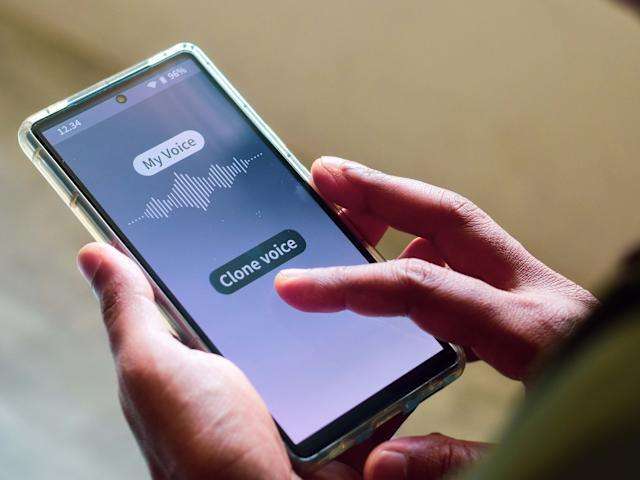

Your phone rings. It’s your brother’s voice, and he sounds panicked. “I’ve been in an accident. I need money right now. Please don’t tell Mum.”
You don’t stop to ask whether it’s really him. It sounds like him, it talks like him, and he’s in trouble. So you send the money.
Except your brother is fine. He’s at home, watching TV. The voice on the phone was a copy, made by software from a few seconds of audio taken from his social media.
This is where scams are heading, and it’s already happening. Artificial intelligence can now copy voices, generate realistic videos and write messages that sound completely natural. Tools that used to need a film studio are now free or cheap, and scammers are using them.
What AI scams actually look like
Voice cloning. Software can copy someone’s voice from a short clip, like a voice note, a video on Instagram or TikTok, or even a recorded call. The scammer then uses it to call or send voice notes as that person, usually asking for urgent money.
Fake videos (deepfakes). AI can make a video of a real person saying things they never said. Scammers use these to push fake investment schemes, fake giveaways and fake endorsements, often with the face of a well-known businessman, pastor, politician or celebrity.
The fake boss. An employee gets a call or voice note that sounds exactly like the boss, asking for an urgent transfer or for company login details. Small businesses are easy targets because staff often act fast on the boss’s word.
Perfect-sounding messages. The old warning sign of bad grammar is fading. AI can write clean, convincing messages in seconds, in any tone. A well-written message is no longer proof that it’s real.
Fake customer support. AI chatbots and cloned voices pretending to be your bank, your network provider or an online store, calmly walking you through “verifying” your details.
Why these scams work
They don’t rely on technology fooling you. They rely on emotion fooling you.
Notice what all of these have in common: urgency and trust. A panicked family member. A boss who needs something now. A famous face promising easy money. The technology only makes the bait more believable. What the scammer really needs is for you to react before you think.
Warning signs, even when it sounds real
1. Urgent money, urgent secrecy. “Send it now,” “don’t tell anyone,” “I’ll explain later.” Real emergencies can survive a one-minute check.
2. Unusual payment methods. Gift cards, crypto, or transfers to a personal account you don’t recognise.
3. A new number or account. Someone you know suddenly contacting you from a number you don’t have saved.
4. Something feels slightly off. Odd pauses, a flat tone, strange phrasing, or answers that dodge your questions. Voice clones can struggle with normal back-and-forth conversation.
5. Videos that look strange. Lips that don’t quite match the words, unnatural blinking, odd lighting around the face, or a blurry or glitchy edge. These flaws are getting rarer, so don’t rely on this one alone.
6. A famous person promising you money. No businessman, pastor or celebrity is personally giving out cash through a video ad. If it promises guaranteed returns, it’s a scam.
How to protect your family
Set a family code word. Agree on a word or phrase that only your family knows. If someone calls in an emergency asking for money, ask for the code word. A scammer using a cloned voice won’t have it. It takes two minutes to set up and it works.
Hang up and call back. If someone calls asking for urgent help, end the call and phone them back on the number you already have saved. If it’s really them, they’ll pick up. If their phone is off, call another family member to confirm.
Ask something only they would know. Not something that can be found on social media. Ask about a private memory or a detail an outsider couldn’t guess.
Slow the money down. Make it a rule in your family and business that no urgent transfer happens without a second person confirming. For businesses, require two approvals for payments.
Be careful what you post. Public videos and voice notes are raw material for voice cloning. You don’t need to disappear from social media, but think about who can see your posts, and keep accounts private where you can.
Talk to older relatives. Parents and grandparents are often the main targets. They tend to trust a familiar voice. Sit them down and explain this in plain terms. Often one conversation is all it takes.
Treat investment videos with suspicion. Before you act on one, search for the claim on a trusted news site. If a famous person were really giving away money, it would be big news.
If you’ve already been scammed
- Call your bank immediately. Speed matters. Ask them to try to stop or reverse the transfer.
- Report it to the police and to the platform where the scam happened.
- Warn your family and contacts. The scammer may try the same trick on others.
- Change your passwords and turn on two-factor authentication if any account details were shared.
- Don’t be ashamed. These scams are built to fool smart, careful people. Reporting quickly helps you and others.
The rule to remember
Don’t trust a voice or a video just because it looks and sounds real. Trust the check. Verify through a second channel, whether that’s a call back, a code word or a second person, before money moves or information is shared.
Technology will keep improving, and so will the scams. But a one-minute check still beats the best fake.
Written by Enigmaking, a web design and technical implementation studio.











Leave a comment