


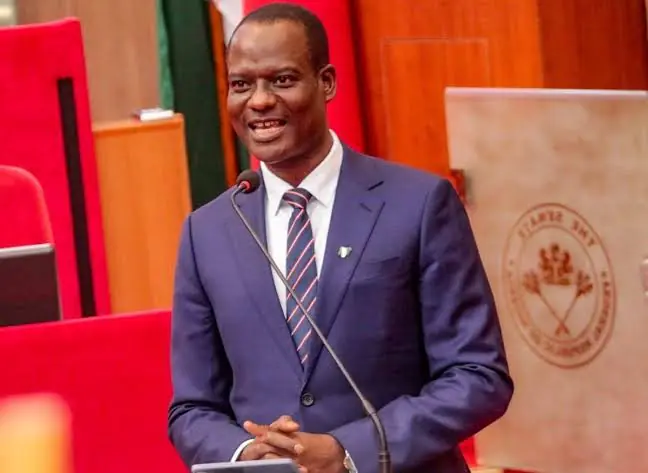
Kaduna State Governor, Senator Uba Sani, has called on the Federal Government and state governments to prioritise the purchase of locally assembled vehicles, declaring that increased public-sector patronage is critical to sustaining Nigeria’s automobile industry, protecting jobs and stimulating economic growth.
The governor made the call during the unveiling of the 2026 Peugeot 3008 and 5008 models at the Dangote Peugeot Automobiles Nigeria Limited (D-PAN) factory in Kaduna on September 4, 2026.
Sani disclosed that he would make a strong presentation to the National Economic Council (NEC), urging federal and state Ministries, Departments and Agencies (MDAs) to consider vehicles assembled by D-PAN when making official procurement decisions.
He also pledged that the Kaduna State Government would purchase some of the vehicles to demonstrate its commitment to local manufacturing and encourage other governments to follow suit.
“I will make a strong presentation at the National Economic Council, urging both the federal and state governments to patronise the products of this company because that is the only way they can survive,” the governor said.
He added that Kaduna State would lead by example by ordering some of the vehicles from the company. The governor commended Alhaji Aliko Dangote for his sustained investment in Nigeria, describing his commitment to local industrial development as an expression of patriotism.
According to Sani, D-PAN has contributed to employment generation, skills development and economic activities within its host community and the wider Kaduna State economy.
He noted that the automobile assembly plant represented an important investment in the state’s industrial future, pledging that his administration would continue to provide the necessary support to strengthen the company’s operations.
Sani also disclosed that Kaduna State had a shareholding interest in the company, making its sustainability and expansion a matter of economic importance to the state.
In a subsequent development, the governor reportedly pledged to provide D-PAN with its official Certificate of Occupancy and engage fellow governors across the 36 states to mobilise broader patronage for vehicles assembled at the Kaduna facility.
The additional commitments underscore the administration’s intention to extend support for the company beyond state-level procurement and encourage a wider market for locally assembled automobiles.
The September unveiling also featured the new Peugeot 3008 and 5008 sport utility vehicles, while the Peugeot Landtrek pick-up forms part of the company’s existing Nigerian vehicle range.
The governor further urged D-PAN management to consider employing graduates of the Kaduna State Institute of Vocational and Skills Development, who had recently completed intensive technical training in partnership with the National Board for Technical Education (NBTE).
He said providing employment opportunities for the graduates would help translate vocational education into practical economic benefits while addressing the shortage of skilled personnel in the manufacturing sector.
Sani maintained that industrial development must be accompanied by deliberate efforts to equip young people with relevant technical skills and create opportunities for them to participate in productive economic activities.
He also commended the company’s corporate social responsibility initiatives in communities surrounding its operations, urging management to expand its interventions to sustain cordial relations with its host community.
D-PAN was established through a joint venture between Dangote Industries Limited and French automobile manufacturer Peugeot, now part of the Stellantis Group.
In April 2026, Peugeot and D-PAN announced that production of the new Peugeot 3008 and 5008 models had commenced at the Kaduna facility, with the vehicles expected to expand the company’s offerings in the Nigerian market.
The development is part of broader efforts to strengthen Nigeria’s automobile assembly industry, encourage technology transfer and reduce dependence on imported vehicles.
However, industry observers maintain that the long-term sustainability of local automobile manufacturing will depend on consistent government policies, competitive pricing, access to finance, reliable infrastructure, quality assurance and effective after-sales services.
For D-PAN, securing government contracts could provide a significant market for its products, while also creating opportunities to expand production and employment.
The governor’s appeal therefore places public procurement at the centre of the debate on Nigeria’s industrial development, with the expectation that government spending can be strategically deployed to support domestic manufacturing without compromising transparency, competitiveness and value for money.
Whether the proposed Kaduna State purchase and broader engagement with the NEC and other governors will translate into sustained orders remains to be seen.





Leave a comment