
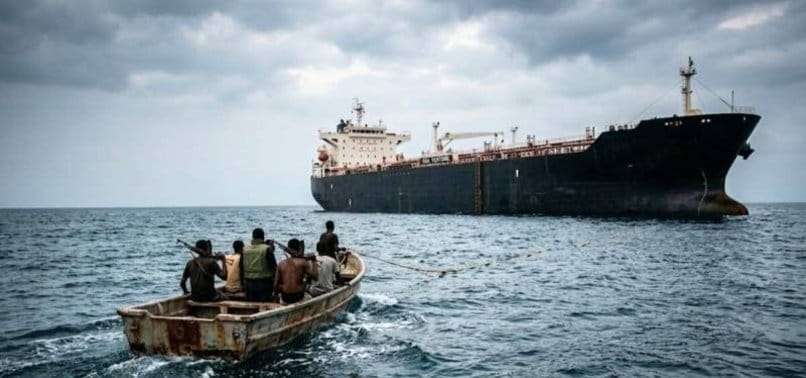

Somali pirates have successfully seized a Togolese-flagged oil tanker in the Gulf of Aden, marking a significant escalation in maritime insecurity off the Horn of Africa. The vessel, identified as the MT Eureka, was commandeered in Yemeni waters early this morning, according to reports from both the Yemeni coastguard and security officials in the semi-autonomous Puntland region.
The hijacking occurred at approximately 5:00 am local time (03:00 BST) near the port of Qana. Security sources indicate that the pirate contingent departed from a remote coastal area near the seaside town of Qandala. The vessel is currently being steered across the Gulf of Aden towards the Somali coastline, where it is expected to drop anchor in the coming hours.
The seizure of the MT Eureka represents the fourth successful hijacking in a mere fortnight, underscoring a dramatic resurgence in a threat that was once thought to be largely contained. It follows the hijacking of the Honor 25 on 22 April, which was laden with 18,500 barrels of oil destined for Mogadishu.
The current wave of attacks suggests a strategic expansion of pirate operations across Somalia’s 3,333-kilometre coastline the longest in mainland Africa.
“The ongoing crisis with the pirates is much worse than many realise,” a senior Puntland security official disclosed. “There are increasing movements of armed groups all over the coast.”
In a separate but related incident, the United Kingdom Maritime Trade Operations (UKMTO) reported on Friday that “armed persons” aboard a skiff approached a bulk carrier near Al-Mukala, Yemen. Investigators have traced the origin of these gunmen to the fishing town of Caluula (Alula), situated some 209 kilometres from the launch point of the MT Eureka hijackers.
Security analysts suggest that the recent surge in piracy, which had been in decline since 2011, is directly linked to the broader regional instability. Since late 2023, the focus of international naval forces has been diverted to counter-insurgency operations against Houthi rebels in the Red Sea and Gulf of Aden. This “security lapse” has provided a window of opportunity for Somali criminal syndicates to resume their high-seas predations with relative impunity.
As of Sunday evening, neither the Somali federal authorities nor the European Union Naval Force (EUNAVFOR)th e primary body overseeing anti-piracy operations in the region have issued a formal statement regarding the fate of the MT Eureka or its crew.
The international community now faces a dual-fronted maritime crisis: the technologically sophisticated missile and drone threats from Yemen to the north, and the return of traditional, opportunistic piracy to the south. For global shipping firms, the Gulf of Aden is once again becoming one of the most hazardous corridors in international commerce.











Leave a comment