
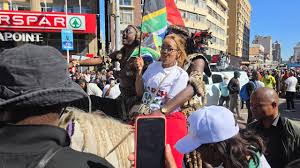

The Mozambican government announced on Tuesday, 9 June, that nine of its nationals have been killed in a violent wave of xenophobic attacks targeting immigrants across South Africa.
In an official statement released by Mozambique’s Information Office (Gabinfo), authorities confirmed that diplomatic procedures have commenced to repatriate the bodies of six victims of the targeted violence. The unrest initially erupted in the coastal town of Mossel Bay, within South Africa’s Western Cape province, before spreading to adjacent areas, including Hermanus.
According to government figures, more than 700 Mozambican citizens have now been successfully evacuated and repatriated from the Western Cape following the sudden surge in anti-immigrant violence, which has left hundreds of families displaced and their properties destroyed.
The repatriation efforts have intensified significantly over the last 24 hours. A cohort of 169 citizens, including 16 minors, was safely processed through the Lebombo Port of Entry as part of an emergency assistance operation coordinated by Mozambique’s diplomatic and consular missions in South Africa.
Officials confirmed that additional evacuation groups are arriving at the borders as state-sponsored transport operations scale up.
Estimates indicate that around 800 Mozambican nationals were directly impacted by the localized mayhem in Mossel Bay, which originally flared up at the end of May. The violence reportedly commenced amid protests over the employment of foreign workers, quickly deteriorating into vigilantism as mobs torched approximately 55 informal settlements and targeted immigrant-owned businesses.
The current crisis has reverberated far beyond Mozambique. Major regional stakeholders including Ghana, Nigeria, Malawi, and Zimbabwe have either commenced their own citizen evacuations or issued urgent safety advisories to their diasporas residing in South Africa.
Compounding the anxiety is a highly publicised “ultimatum” issued by local citizen-led anti-immigrant pressure groups, demanding that all foreign nationals vacate provinces such as KwaZulu-Natal by 30 June. While South African law enforcement agencies and the Border Management Authority (BMA) have strongly condemned the threats and insisted they remain “firmly in control” of public order, the climate of intimidation has prompted thousands of migrants to flee preemptively.
In response to the tragedy, political factions within Mozambique have called for robust action. The ruling party, Frelimo, has engaged South African counterparts to seek permanent solutions based on regional heritage, whilst the main opposition party, Renamo, has demanded a firmer stance from Pretoria to mitigate the severe financial and human losses suffered by Mozambican migrants.
With approximately 300,000 Mozambicans currently residing in South Africa, the Maputo administration has reiterated its commitment to continuously monitoring the volatile security situation and providing emergency humanitarian relief to its citizens at designated border posts.










Leave a comment