
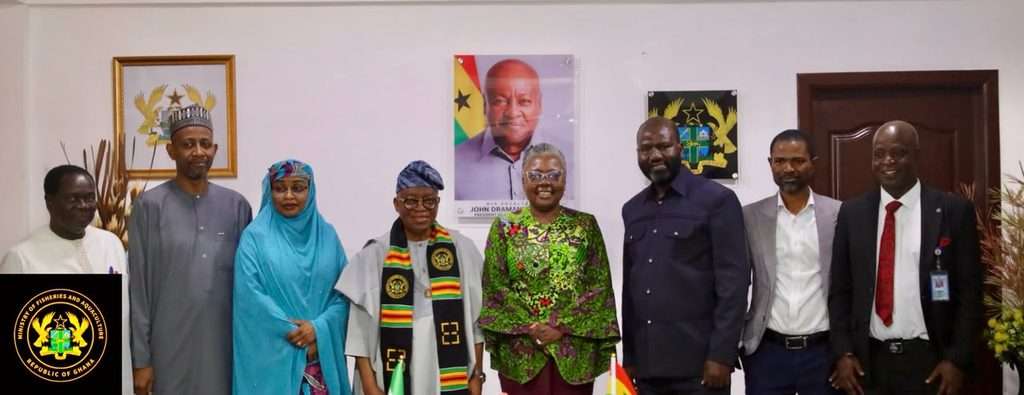

Nigeria and Ghana have agreed to strengthen cooperation in fisheries management, marine conservation and blue economy development, with a focus on combating illegal fishing and promoting the sustainable use of marine resources in the Gulf of Guinea.
The agreement followed a bilateral meeting in Accra, Ghana, between Nigeria’s Minister of Marine and Blue Economy, Adegboyega Oyetola, and officials of Ghana’s Ministry of Fisheries and Aquaculture.
The meeting, held during Mr Oyetola’s working visit to Ghana as Chairperson of the Fisheries Committee for the West Central Gulf of Guinea (FCWC), reaffirmed both countries’ commitment to formalising partnerships to protect marine resources and build a secure, productive and sustainable blue economy.
A statement issued after the meeting on Tuesday said the discussions focused on strengthening fisheries management, conserving marine ecosystems and expanding cooperation to ensure the long-term sustainability of shared marine resources.
Welcoming the Nigerian delegation, the Executive Director of Ghana’s Fisheries Commission, Benjamin Campion, highlighted the longstanding relationship between the two countries and stressed the need for closer collaboration in managing their shared marine environment.
Mr Oyetola congratulated Ghana on its progress in establishing Marine Protected Areas and the passage of the Fisheries and Aquaculture Act, 2025 (Act 1146).
He emphasised the importance of stronger bilateral cooperation to tackle illegal, unreported and unregulated fishing, address declining fish stocks and facilitate legitimate fish trade between Nigeria and Ghana.
Illegal, unreported and unregulated fishing remains a major challenge to sustainable fisheries management, threatening fish populations, undermining the livelihoods of coastal communities and affecting legitimate fishing businesses.
The minister’s remarks underscored the need for coordinated action by both countries to strengthen enforcement, improve fisheries governance and safeguard marine resources for future generations.
Ghana’s Minister of Fisheries and Aquaculture, Emelia Arthur, also called for enhanced collaboration in joint research, information sharing, coordinated enforcement and climate-resilient fisheries management.
Ms Arthur highlighted further opportunities for cooperation in developing coastal livelihoods, protecting marine ecosystems and exchanging knowledge on blue economy strategies.
The proposed areas of collaboration are expected to support efforts to improve fisheries productivity, protect vulnerable marine habitats and strengthen the economic opportunities available to coastal communities in both countries.
The partnership reflects the growing importance of regional cooperation in addressing challenges affecting the Gulf of Guinea, where sustainable management of marine resources is essential to food security, employment, trade and economic development.
Both countries reiterated their commitment to exploring and formalising practical partnerships that will promote responsible fishing practices, protect marine biodiversity and advance a sustainable blue economy across the region.





Leave a comment