


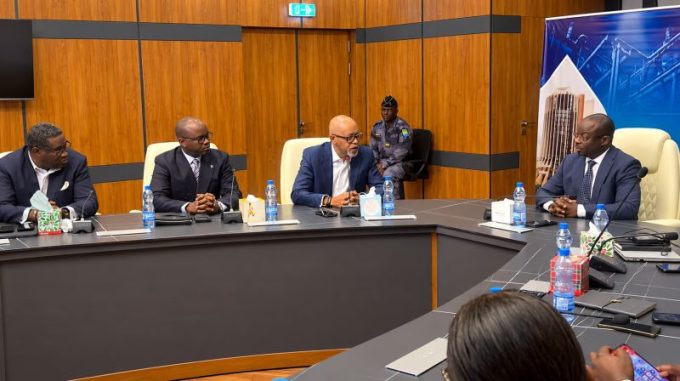
A coalition of Niger Delta stakeholders has expressed profound disappointment over the recent conduct of a National Assembly roundtable discussion regarding the review of pipeline surveillance contracts. In a strongly worded statement, the group criticised the “surreptitious manner” in which the inquiry was held, alleging it lacked the participation of authentic regional representatives and host communities.
The controversy centres on the rising demand for the decentralisation of surveillance contracts currently held by three private firms: Tantita Security Services Limited, Maton Engineering, and Pipeline Infrastructure Nigeria Limited (PINL).
The stakeholders argued that the current surveillance framework ignores the Petroleum Industry Act (PIA). Sections 256 and 257 of the Act place vicarious liability on host communities for the safety of oil infrastructure in their domains. Despite this, the group maintains that contracts were awarded without consultation with these communities.
The National Assembly was further criticised for failing to “feel the pulse of the people” through public memoranda or fact-finding visits. Instead, the group described the proceedings as a “staged home movie,” noting that only Tantita Security Services was invited to present, leading to a premature “vote of confidence” that the group claims erodes trust in the legislative process.
A significant portion of the outcry stems from contradictory figures regarding Nigeria’s crude oil output. During the roundtable, representatives from the Nigeria Security and Civil Defence Corps (NSCDC) claimed production had exceeded 1.8 million barrels per day (bpd). However, this was contradicted by other reports: Tantita’s MD: Reported a rise to only 1.4 million bpd after taking over security. Historical Context: Between 2020 and 2021, despite rampant illegal bunkering, production remained higher, at 1.8 to 1.9 million bpd.
NUPRC Data (January/February 2026): Reveals a massive 16.6 million-barrel shortfall. January averaged 1.63 million bpd, while February plummeted to 1.48 million bpd far below the government’s 1.84 million bpd benchmark.
“Why hasn’t production increased despite a reported 99.9% reduction in illegal oil activities?” the group queried, suggesting that large-scale theft may still be occurring at the terminals under the cover of the current surveillance structure.
The coalition, led by Ogboka Chris Umeda and Chief Charles Ekoro, called on the Federal Government to dismantle the existing “monopolistic” structure. They advocate for a decentralised, state-level management system to: Improve intelligence gathering through local knowledge. Foster genuine community cooperation. Target a production goal of over 2 million barrels per day.
The statement concluded with a warning that the current system benefits only a select few at the expense of national security and the economic well-being of Nigerians. The petition has been copied to President Bola Ahmed Tinubu, the leadership of the National Assembly, and the National Security Adviser.
Signed: Ogboka Chris Umeda (President), Chief Charles Ekoro (Secretary), and 13 other prominent regional representatives.
A copy of the press statement obtained by Africa Update reads: NIGER DELTA ECONOMIC JUSTICE MOVEMENT
10 Igwe Street, 2nd Artillery Junction, Port Harcoourt, Rivers State.
E.mail: patriotsrivers@gmail.com
Tel: 07033393502
PRESS STATEMENT
Decentralization of the Niger Delta Pipeline Surveillance Contracts and the need for broader consultation and engagement of Stakeholders.
Hopes were raised last week by news of the round table convoked by the National Assembly to probe into and review the contracts for pipeline surveillance in the Niger Delta. These hopes were quicky dashed by the surreptitious Mannar in which the round table discussion was held with no input from authentic stakeholders from the Niger Delta.
Recall that recently, calls has been on the rise across the region, demanding for the decentralization of the pipeline surveillance contracts currently awarded to three private companies; Tantita Security Services Limited, Maton Engineering and Pipeline Infrastructure Nigeria Limited (PINL).
The said pipeline surveillance contracts were awarded with no inputs from host communities and genuine stakeholders in the region , despite clear provisions of the Petroluem Industry Act (sections 256-257) which places vicarious liability in the host communities for the safety of oil infrastructure, including pipelines in their areas.
It was therefore shocking that the National Assembly could convene and hold a round table discussion on the current region wide agitation for decentralization of the pipeline surveillance contracts without the inputs of the host communities and relevant stakeholders from the region.
The National Assembly neither deemed it necessary to feel the pulse of the people in the region , either through an open and well advertised call for memoranda on the subject or undertake fact finding visits to the region , to interact with the people and hear first hand their views on the pipeline surveillance contracts.
The National Assembly was expected to investigate the current agitations for decentralization of the contracts as well as all contractors associated with pipeline surveillance contracts, including PINL, Maton Engineering, and Tantita Security Services. However, it only called in Tantita, turning the inquiry into more of a Nigeria home movie than a thorough investigation.
In a move that raised concerns about transparency, the National Assembly passed a vote of confidence on Tantita without conducting a meaningful probe. This public show of support has fueled suspicions of corruption and eroded trust in a system that seems to prioritize private interests over national ones.
The recent roundtable discussion should not be confused with a formal legislative hearing, as it lacked transparency and accountability. Unlike public hearings, which typically involve broad stakeholder input, this limited forum cannot adequately represent the interests of the wider Niger Delta community.
The failure to involve key stakeholders in the pipeline surveillance contract process has caused the current crisis. As the Director-General of the State Security Service (SSS) noted, greater community involvement could have prevented much of the crisis. As it stands, the system now benefits a select few, jeopardizing national security and the well-being of Nigerians.
National Assembly by passing a vote of confidence in Tantita Security Services has shown that it is complicit in the perpetual circle of under development of the region.
The National Assembly by refusing to conduct an investigation is contributing to the country’s downfall rather than passing laws that could improve Nigeria.
During the roundtable, a representative from the Nigeria Security and Civil Defence Corps (NSCDC) claimed that Nigeria’s crude oil production had exceeded 1.8 million barrels per day. This statement contradicts official data from the NNPC, the Central Bank, and the National Bureau of Statistics, which undermines efforts to combat oil theft and creates confusion both domestically and internationally.
The Managing Director of Tantita Security Services explained that Nigeria’s oil production was 1.8 million barrels per day in 2020. Due to inadequate anti-theft measures, production fell to 1.6 million in 2021 and further to 1.1 million in 2022. However, after taking over pipeline security, production rose to 1.4 million barrels per day.
Between 2020 and 2021, illegal bunkering and refining operations flourished. Despite these challenges, Nigeria’s crude oil production remained high, at around 1.8 to 1.9 million barrels per day.
This raises a critical question: Why hasn’t production increased despite a reported 99.9% reduction in illegal oil activities in the creeks? This suggests that some parties may still be stealing Nigeria’s crude at the terminals, using pipeline surveillance as a cover for their crimes. Decentralizing surveillance contracts could potentially put an end to large-scale theft.
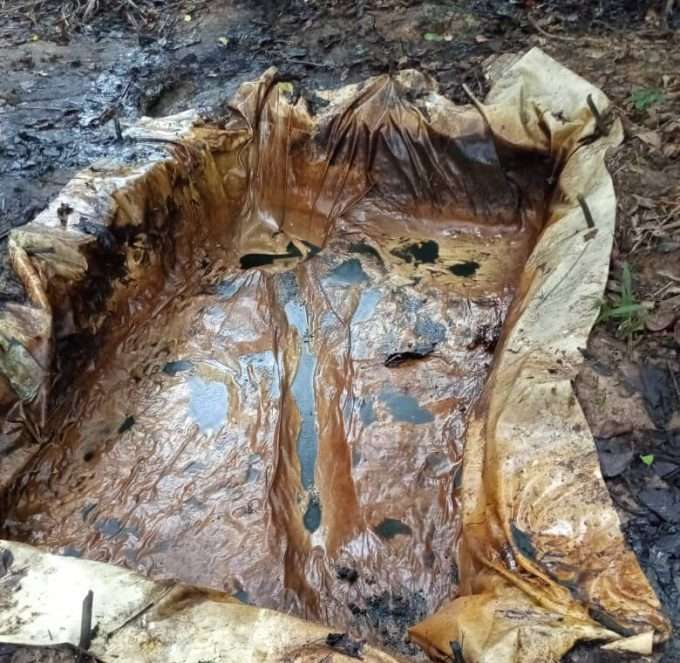
Tantita Security Services’ presentation at the roundtable appeared clearly scripted— from the staged scenes of crude theft to the actors playing the roles of armed criminals in the creeks. If the presentation were genuine, why didn’t they display the crude captured in large vessels? Their deception has been exposed, but the drive to decentralize surveillance to state-level management continues to gain momentum.
There are also conflicting reports about Nigeria’s crude oil production. While some security agencies claim production is between 1.8 and 1.9 million barrels per day, Tantita’s Managing Director contradicts this. A recent analysis from THISDAY, based on data from the Nigerian Upstream Petroleum Regulatory Commission (NUPRC), reveals a 16.6 million-barrel shortfall in crude oil and condensate production for January and February 2026.
In January, Nigeria produced 50.5 million barrels, and in February, output dropped to 41.6 million barrels. This brought the total for the two months to 92 million barrels, which is far below the government’s 2026 benchmark of 1.84 million barrels per day. Daily production averaged 1.63 million barrels in January, and dropped to 1.48 million barrels in February, contributing to the overall shortfall.
We call on the Federal Government to take immediate action, including dismantling the current pipeline surveillance contract structure and establishing a transparent, decentralized surveillance system. A decentralized approach involving state-level management would improve intelligence gathering, foster greater community cooperation, and help Nigeria increase oil production to over 2 million barrels per day.
Signed
Ogboka Chris Umeda – President
Chief Charles Ekoro – Secretary
Daniel Nwankwoala
Maxwell D. Ibelegbu
Moses Fabian Urang
Nwakanma Owhonda
Wagbara Precious Ovunda
Karl Chinedu Uchegbu
Prince Joshua Crispus Ovoh
Wariso Wariso
Precious Nwibana
Hector Ekeakite
Charles Odi
Chukwuma Anyanwu
Agumuo Goodluck
C.C.
His Excellency President Bola Ahmed Tinubu
The Senate President , Senator Godswill Akpabio
The Speaker , House Representatives, Hon. Tajudeen Abass
The Group Managing Director, NNPC Limited
The National Security Adviser to the President
The Director General, Department of State Services (DSS)
The Minority Leader, House of Representatives, Hon. O.K. Chinda
The Chairman , House of Representatives Committee on Host Communities, Hon. Dum Deekor.









Leave a comment