
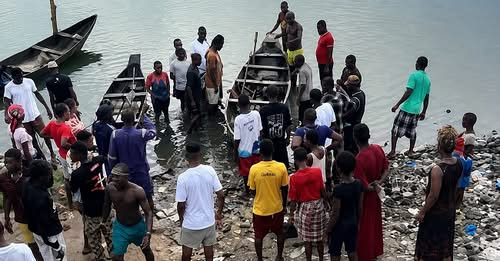

No fewer than 43 suspected oil thieves are feared to have died after inhaling toxic petroleum fumes while allegedly siphoning petroleum products at Okari Jetty in the Okrika mainland area of Okrika Local Government Area, Rivers State.
The incident reportedly occurred around 12:00 a.m. on September 3, when a vessel was berthed at the jetty to load petroleum products for export.
According to community sources, more than 200 youths from Okrika and neighbouring communities had arrived at the jetty in locally made boats and allegedly attempted to siphon petroleum products from an illegally tapped point connected to a pipeline.
The pipeline is said to convey petroleum products from the Indorama Eleme Petrochemical complex through the Port Harcourt Refinery to vessels that reportedly berth at the jetty periodically for export.
Sources said that while the vessel was loading, the youths were simultaneously scooping petroleum products from the illegal tap when the pungent fumes, locally referred to as “Indorama fuel”, became concentrated around the area.
Several of the youths reportedly inhaled the fumes, collapsed and fell into the water, while others managed to escape and were taken to hospitals for treatment after developing severe respiratory complications.
A community source said 37 of the deceased had been identified as indigenes of Okrika, while six others remained unidentified. Several people were also reportedly still missing as of Thursday evening.
“The river is still bringing up bodies, but they have not been recovered,” the source said.
The Commander of the Civilian JTF in Okrika Local Government Area, Igwe Godswill, confirmed the incident, describing it as a tragedy involving predominantly young people searching for means of livelihood.
“It is so pathetic that this incident is happening in our community. These are young guys who have gone to search for their daily bread, only for the fumes from the fuel that was pumped to kill so many of our youths under the bridge,” he said.
Godswill said many of the victims were overcome by fumes while attempting to scoop petroleum products floating on the water.
He disclosed that about 10 bodies had initially been recovered, although several could not be identified because of the condition of the remains.
“We saw about 10 of them. Four were still unrecognisable, while four persons were identified. The rest could not be identified because their bodies were badly damaged and their faces were severely affected,” he said.
The Civilian JTF commander appealed to the Rivers State Government, local government authorities, community leaders and other stakeholders to create sustainable employment opportunities for young people in the area.
He argued that simply preventing youths from engaging in dangerous activities would not address the underlying economic pressures driving them into such activities.
“These things are risky, but when you cannot feed your children, most times, those risky jobs become the only option,” he said.
Godswill further revealed that some youths had continued to visit the area despite reports of deaths linked to the activity, underscoring the need for alternative sources of livelihood.
The spokesperson for the Rivers State Police Command, ASP Agabe Blessing Karbolo, also confirmed the incident to journalists.
Karbolo, however, said the command had not received any official complaint regarding the deaths. She added that the police had commenced an investigation to determine the exact number of casualties and establish the circumstances surrounding the incident.
Meanwhile, the Youths and Environmental Advocacy Centre (YEAC-Nigeria) confirmed the deaths and called for an immediate investigation into the incident.
The organisation’s Executive Director, Fyneface Dumnamene Fyneface, said at least 37 people had died after inhaling the petroleum product during the alleged illegal loading operation.
YEAC-Nigeria urged the National Oil Spill Detection and Response Agency (NOSDRA) to conduct a Joint Investigation Visit to the site to establish the circumstances surrounding the incident and assess its environmental implications.
The group also called on oil companies operating in the area to strengthen security around pipelines and other oil infrastructure to prevent illegal tapping and similar tragedies.
YEAC-Nigeria warned youths against approaching oil and gas infrastructure, stressing the dangers associated with high-pressure petroleum products and toxic fumes.
It further advocated the creation of alternative livelihood opportunities, including support for modular refineries and the proposed Presidential Artisanal Crude Oil Refining Development Initiative (PACORDI), as measures to reduce dependence on hazardous illegal oil-related activities.
The search for missing persons was said to be continuing as medical teams attended to survivors suffering from respiratory complications.
The tragedy has once again highlighted the grave human and environmental risks associated with oil bunkering, pipeline vandalism and illegal petroleum product activities in the Niger Delta, where economic hardship and unemployment continue to push some young people towards increasingly hazardous means of livelihood.










Leave a comment