
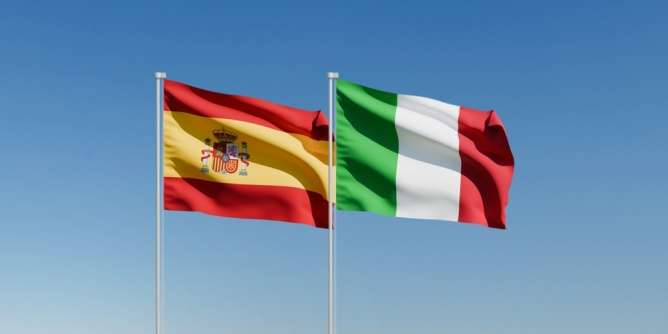

Spain has introduced temporary border checks on travellers arriving from Italy, in a tit-for-tat response to similar restrictions imposed by Rome, deepening a diplomatic dispute between the two European Union member states.
The Spanish measures came into effect at midnight on Saturday and are expected to remain in place for at least one month, according to Spanish authorities.
The dispute erupted after tens of thousands of migrants crossed from Morocco into Spain’s North African enclave of Ceuta, prompting Italy to temporarily suspend the Schengen border-free arrangements with Spain in an attempt to prevent the migrants from travelling onwards to Italy.
Following the implementation of Spain’s measures, Italian travellers arriving at Barcelona airport were subjected to random police checks, according to Spain’s state news agency, EFE.
The Spanish decision came a day after Italy rejected a warning from Madrid that it would take measures to protect the dignity of Spanish citizens if Rome failed to withdraw its restrictions by Sunday.
Italy, however, has maintained its position, with Prime Minister Giorgia Meloni’s government saying border checks on people arriving from Spain by sea or air would remain in place until at least August 15.
“Italy does not accept ultimatums or impositions from abroad about national security and border control,” the Italian Prime Minister’s office said in a statement.
The row has brought tensions between the two EU members into sharper focus, particularly over migration policy.
Meloni, who has consistently advocated a tougher approach to immigration, has been highly critical of Spain’s more progressive migration policies. Other EU leaders with similarly restrictive positions have also criticised Madrid’s approach.
One of the policies that has attracted criticism is Spain’s decision to grant amnesty to undocumented migrants who could demonstrate that they had lived in the country for at least five months. More than one million people reportedly applied before the application window closed at the end of June.
The dispute has raised concerns over the implications of renewed border checks for the European Union’s Schengen Area, which allows citizens of most EU countries to travel freely across participating states without routine internal border controls.
Under EU rules, member states may temporarily reintroduce controls at internal borders where there is a serious threat to internal security. However, the European Union stipulates that such measures should be used only as a last resort, in exceptional circumstances, and for a limited period.
The latest measures by Spain and Italy therefore represent a significant departure from the normal free movement arrangements underpinning the Schengen system, albeit temporarily.
The diplomatic standoff comes as European governments remain divided over how best to manage migration, border security and the distribution of asylum seekers across the bloc.
With both Madrid and Rome maintaining their respective positions, pressure is mounting for diplomatic efforts to resolve the dispute before the temporary restrictions further disrupt travel and strain relations between the two EU partners.











Leave a comment