

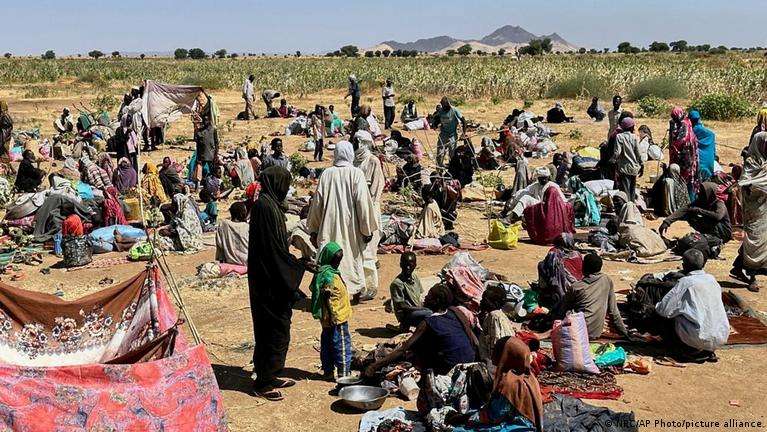

The International Federation of Red Cross and Red Crescent Societies (IFRC) has issued a dire warning regarding the humanitarian situation in Sudan, describing the state of Al Fasher as “catastrophic” exactly 100 days after the city was seized by paramilitary forces.
Speaking at a press conference in Geneva on Tuesday, Pierre Kremer, the IFRC’s Deputy Regional Director for Africa, expressed profound concern that the atrocities witnessed in North Darfur may soon be replicated in the Kordofan region.
Al Fasher, once the Sudanese army’s final stronghold in the Darfur region, fell to the Rapid Support Forces (RSF) on 26 October. Since then, the city has been plagued by reports of mass killings, sexual violence, abductions, and widespread looting.
“It has been 100 days of fear and displacement,” Mr Kremer stated, noting that civilians continue to pay the “highest price” in what has become the world’s most severe humanitarian crisis. He confirmed that humanitarian operations in the city remain largely on hold due to extreme access constraints, leaving thousands without essential aid.
Following the capture of Al Fasher, the RSF has turned its military focus toward Kordofan, a region of significant economic importance due to its oil and gold reserves. The IFRC warned that the deteriorating situation, particularly in South Kordofan, suggests a repeat of the Al Fasher tragedy.
While the Sudanese army claimed on Tuesday to have broken an RSF siege on Kadugli, the capital of South Kordofan, Mr Kremer highlighted that access remains “complicated” and that thousands of civilians in the region remain beyond the reach of aid workers.
The local Sudanese Red Crescent Society (SRCS) continues to operate through volunteers on the ground, despite being unable to formally enter Al Fasher. The cost of this dedication has been high; Mr Kremer revealed that 21 SRCS colleagues have been killed in the line of duty since the conflict began.
Urging the international community to intervene and bring an end to the hostilities, the IFRC emphasised that the Sudanese people aspire to more than mere survival. “After almost three years of conflict… what people aspire to is not only to be the recipient of aid, they also want to be in a condition to lead a productive life,” Mr Kremer concluded.
The IFRC’s appeal comes as figures from UNICEF suggest nearly 9.5 million people have been internally displaced across the war-torn nation, marking it as the largest displacement crisis globally.









Leave a comment