
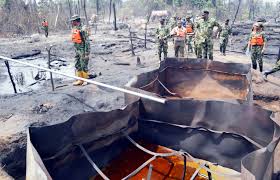

In a significant escalation of the offensive against economic sabotage, the Nigerian Navy has dismantled no fewer than 22 illegal refineries across the Niger Delta during the first quarter of 2026. The operations, conducted under the newly established “Operation Delta Sentinel,” have successfully disrupted critical storage and distribution networks utilised by crude oil thieves.
The Director of Naval Information, Abiodun Folorunsho, revealed in a comprehensive operational report that the Navy conducted over 183 successful interventions between January and March. These efforts resulted in the recovery of 531,500 litres of illegally refined petroleum products and the arrest of 18 suspects linked to maritime crimes.
Operation Delta Sentinel, which commenced on 13th January 2026, succeeded Operation Delta Sanity II. According to Commodore Folorunsho, the current framework relies on enhanced surveillance and coordinated inter-agency intelligence to dismantle illicit networks embedded within the region’s complex creeks and waterways.
The quarterly data indicates a persistent struggle for control of the maritime domain. February recorded the highest volume of seizures with 360,700 litres, while January and March accounted for 118,800 and 52,000 litres respectively.
Naval operatives achieved several milestones during the three-month period, targeting notorious hotspots in Rivers, Bayelsa, and Delta states:
Rivers State: Between 20th and 23rd January, 45,000 litres of stolen products were intercepted. This was followed by the seizure of an 18-tonne barge on 13th February, believed to be a primary vessel for large-scale crude transportation.
Bayelsa State: On 23rd February, a massive 96,000-litre illegal wellhead was uncovered a major supply point feeding illicit refining clusters in the area.
March Intensification: Coordinated raids across Warri South-West, Alakiri River, and the Ogbia/Egbema/Ndoni axis led to further recoveries, including 45,000 litres of crude at Alakiri River and 44,000 litres of automotive gas oil (diesel) at Ogbologo, where eight suspects were apprehended.
In a significant post-quarter development, the Navy expanded its enforcement reach to Calabar, Cross River State. Intelligence tracking led to the arrest of three vessels suspected of conveying stolen crude oil, resulting in the detention of 26 individuals currently under investigation.
The report noted that while the destruction of 22 refineries, four storage facilities, and multiple pipeline connections has progressively reduced the profitability of these syndicates, criminal actors remain resilient and continue to adapt their tactics to evade detection.
The Chief of the Naval Staff, Vice Admiral Idi Abbas, has directed that operations under the Delta Sentinel framework remain sustained to ensure tighter control of Nigeria’s maritime domain. The Navy maintains that these “structured and intelligence-driven” approaches are vital for protecting critical national economic assets and improving national crude oil output.
“The Nigerian Navy remains committed to degrading oil theft syndicates,” the statement concluded, affirming that the service will continue to strengthen collaborations with other security agencies to secure the nation’s wealth.












Leave a comment