
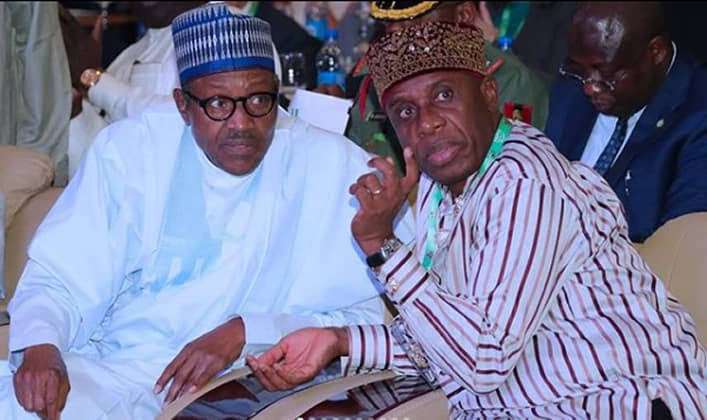

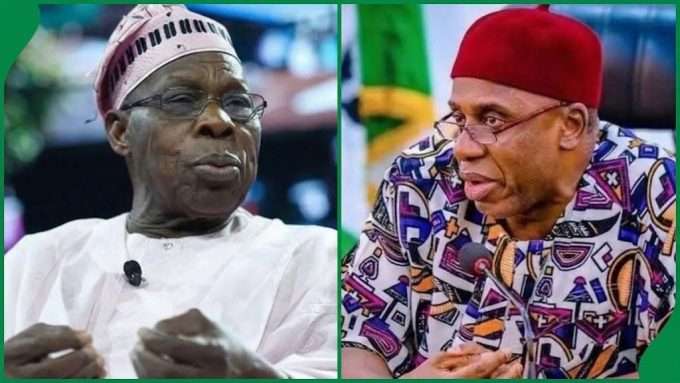
Former Minister of Transportation and ex-Rivers State Governor, Rotimi Amaechi, has blamed his defeat in the 2022 All Progressives Congress (APC) presidential primary on his decision to trust an alleged promise by former President Muhammadu Buhari to endorse him as the party’s candidate.
Amaechi said Buhari had instructed him not to campaign or negotiate political deals with delegates and influential party stakeholders, assuring him that he would announce him as his preferred candidate ahead of the presidential primary.
The former governor, who is now the African Democratic Congress (ADC) vice-presidential candidate for the 2027 presidential election, made the disclosure during an interview on Mainland 98.3FM’s The Situation Room programme in Lagos on Friday.
Reflecting on the circumstances surrounding his defeat to President Bola Tinubu, Amaechi described his decision to heed Buhari’s advice as his biggest political mistake.
“The first mistake that I made at that primary was that I listened to President Buhari. He said to me, ‘Don’t campaign. Don’t do anything. I will announce you as my candidate.’
“He told me that. He put it in writing. When I write my book, I’ll put it out,” Amaechi said.
He explained that he trusted the former president’s assurance because Buhari was his superior and had the political influence to determine the party’s choice of presidential candidate.
According to him, the expectation of receiving Buhari’s endorsement discouraged him from actively negotiating with governors and other influential APC members whose support could have strengthened his chances at the primary.
Amaechi admitted that his refusal to engage in political bargaining placed him at a disadvantage, giving Tinubu greater room to negotiate alliances and secure the backing of party stakeholders.
He said he could have offered influential politicians strategic positions, including the vice-presidency and Secretary to the Government of the Federation (SGF), in exchange for their support.
“Now, I didn’t do deals. So I would have promised you vice-president, promised you SGF, and then would have gone for this primary, I would have possibly won. I would have had governors on my side.
“Because I didn’t do deals, Tinubu had the chance to do deals,” he said.
The ADC vice-presidential candidate also alleged that religious considerations played a significant role in determining the outcome of the 2022 APC presidential primary.
Amaechi claimed that supporters of Tinubu mobilised delegates, particularly governors in the North-West, by appealing to shared religious identities.
He alleged that a delegation of Yoruba Muslims from the South-West approached governors in the region and urged them to support Tinubu on religious grounds.
He also referenced former Kaduna State Governor, Nasir El-Rufai, whom he said had initially supported his presidential ambition but subsequently backed Tinubu.
“El-Rufai was my supporter. El-Rufai, in a viral video, said this is done for the faith,” Amaechi stated.
However, the former governor maintained that he would not exploit religious identity to advance his political ambition, arguing that such an approach could deepen divisions and threaten national unity.
He cited Nigeria’s Catholic community as an example, insisting that he would not ask church leaders to mobilise members to vote for him simply because they shared the same faith.
“I wouldn’t want to run that kind of federation. Catholics are 35 million in Nigeria. I wouldn’t want to go to the Catholic Church and say, please announce me. Tell them that all Catholics must go out and vote Amaechi.
“It will cause confusion. It will cause problems in the country. That makes me a nationalist,” he said.
The APC presidential primary was held at Eagle Square, Abuja, in June 2022, with Tinubu emerging as the party’s flag-bearer for the 2023 presidential election.
Tinubu secured 1,271 votes to defeat 13 other aspirants, while Amaechi finished second with 316 votes. Former Vice-President Yemi Osinbajo came third with 235 votes.
Amaechi had resigned as Minister of Transportation to pursue his presidential ambition and had previously served as Director-General of Buhari’s successful 2015 presidential campaign.
He subsequently became one of the leading figures in the opposition ADC ahead of the 2027 general election.
His latest revelation has reopened discussions about the influence of presidential endorsements, political negotiations, religious considerations and internal power dynamics in determining candidates within Nigeria’s major political parties.




Leave a comment