
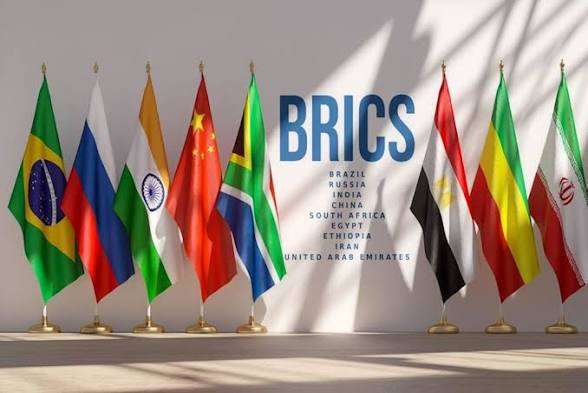

BRICS countries are exploring the integration of their national instant payment systems and central bank digital currencies (CBDCs) in a move aimed at reducing the cost and improving the efficiency of cross-border transactions among member states.
Reserve Bank of India Governor, Sanjay Malhotra, disclosed the development in comments reported by Brazilian media and subsequently covered by TV BRICS.
Malhotra said the proposed integration would bring together financial systems that currently operate independently, potentially creating a more seamless cross-border payments infrastructure among economies that account for a significant share of global trade and economic output.
He said the high cost of cross-border payments remains a common concern among BRICS members, adding that deeper financial connectivity could provide significant opportunities to address the challenge.
“Cross-border payments are of interest to all of us, including the BRICS countries, as we believe there is great potential here for reducing costs,” Malhotra said.
However, he noted that the technical parameters of any proposed shared infrastructure had not yet been disclosed, while the specific model of integration and implementation timeline remained under discussion.
India, which holds the BRICS chairmanship this year, is hosting the group’s annual summit and is therefore playing a prominent role in shaping discussions around financial integration.
Earlier in 2026, the Reserve Bank of India recommended that the government place the integration of central bank digital currencies on the agenda of the BRICS summit, signalling New Delhi’s intention to advance discussions on the issue during its chairmanship.
BRICS currently comprises Brazil, Russia, India, China, South Africa, Egypt, the United Arab Emirates, Ethiopia, Indonesia and Iran. The bloc’s members operate different currencies, financial infrastructures and regulatory regimes, making the technical and regulatory coordination required for payment-system integration a significant undertaking.
Nigeria’s Potential Role
The development could also have implications for Nigeria, which formally joined BRICS as a partner country in January 2025 following an announcement by Brazil, which held the bloc’s presidency at the time.
Nigeria became the ninth BRICS partner country, joining Belarus, Bolivia, Cuba, Kazakhstan, Malaysia, Thailand, Uganda and Uzbekistan.
The partner-country category was established at the 16th BRICS Summit in Kazan, Russia, in October 2024.
Brazil’s Foreign Ministry said Nigeria’s inclusion reflected shared interests in strengthening cooperation among countries of the Global South and advancing reforms to international institutions. It also cited Nigeria’s large population, position as Africa’s most populous country and role in promoting South-South cooperation as factors supporting its admission.
As a partner country, Nigeria can participate in selected BRICS activities and engage with the bloc’s initiatives, potentially creating opportunities in areas including trade, investment and cross-border financial cooperation.
The proposed BRICS payment integration could therefore become particularly significant for Nigeria if the initiative is eventually expanded to include partner countries.
Greater connectivity between national payment systems and digital currencies could potentially make cross-border transactions faster and less expensive, while reducing some of the frictions associated with conventional international payment channels.
Nigeria’s interest in the BRICS agenda has also been reinforced by its broader advocacy for stronger financial and multilateral cooperation among emerging economies.
In April 2025, Nigeria’s Foreign Minister, Yusuf Tuggar, expressed the country’s support for BRICS’ efforts to promote a fairer, rules-based international order during the bloc’s Foreign Ministers’ Meeting in Rio de Janeiro, Brazil.
Tuggar also highlighted Nigeria’s alignment with the BRICS vision for global financial reform and enhanced multilateral cooperation.
As BRICS members continue discussions on integrating instant payment systems and CBDCs, the outcome could shape the future of cross-border financial transactions within the expanded BRICS framework and potentially create new avenues for Nigeria’s participation in emerging global payment infrastructure.










Leave a comment