



Nigeria stands to accrue as much as ₦30 trillion in additional petroleum revenue should the escalating hostilities in the Middle East drive global crude prices toward the $130 per barrel mark. This projection was contained in a strategic policy brief released on Saturday by the Nigerian Economic Summit Group (NESG).
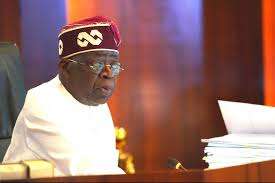
The prominent think-tank noted that such a development could provide the administration of President Bola Tinubu with its most substantial fiscal windfall to date. However, the group accompanied its projections with a stern warning, suggesting that the bounty could present significant political and policy risks as the nation draws closer to the 2027 general elections.
In the report, titled “Boom, Not Gloom,” the NESG asserted that the heightened tensions involving the United States, Israel, and Iran present a “time-limited opportunity” for Nigeria to bolster its fiscal standing. The group emphasized that this potential success is contingent upon the government’s ability to eschew the profligate spending that has historically marred previous oil booms.
“Fiscal windfalls could range from ₦2.3 trillion under a short-lived crisis to ₦30.2 trillion under a protracted scenario,” the NESG stated.
Currently, Brent crude is trading at approximately $99.80 per barrel, remarkably higher than Nigeria’s 2026 budget benchmark of $64.90. This price differential offers a vital revenue surge that could prove instrumental in financing the nation’s fiscal deficit, which currently exceeds ₦25 trillion.
Projected Price Trajectories
The NESG outlined three potential pathways for crude prices based on the severity of the Middle East crisis:
Contained Disruption: Prices averaging $90 per barrel.
Regional Spread: Prices climbing to $110 per barrel if the conflict encompasses the wider Gulf region.
Prolonged Global Shock: Prices reaching $130 per barrel.
Under the most extreme of these scenarios, the Federal Government’s share of the windfall would be sufficient to satisfy annual debt-service obligations or, alternatively, fund roughly 60 per cent of the national capital budget.
Despite the optimistic revenue projections, the NESG cautioned that these gains remain precarious. A primary concern is Nigeria’s struggling oil production, which has averaged 1.48 million barrels per day (mbpd) this year a figure significantly lower than the 1.84 mbpd target set in the national budget. Should production levels fail to recover, the projected revenue gains could diminish by an estimated 20 per cent.
Furthermore, the think-tank identified the impending January 2027 election cycle as a “key domestic risk.” The report warned that the political climate might exert pressure on the administration to increase public spending or reintroduce the contentious petrol subsidy, both of which could jeopardize recent economic reforms.
The NESG has therefore urged the Federal Government to “firmly resist any pressure to reintroduce fuel subsidies,” arguing that such a move during an oil price rally would recreate the economic distortions that historically eroded the benefits of high crude prices.
The report concluded with a warning regarding the domestic cost of living. Even as revenue grows, rising global oil prices are expected to filter into local costs. According to NESG estimates, the price shock could add between 1.3 and 5.2 percentage points to the inflation rate over the coming quarters, depending on the duration of the crude price elevation.







Leave a comment