

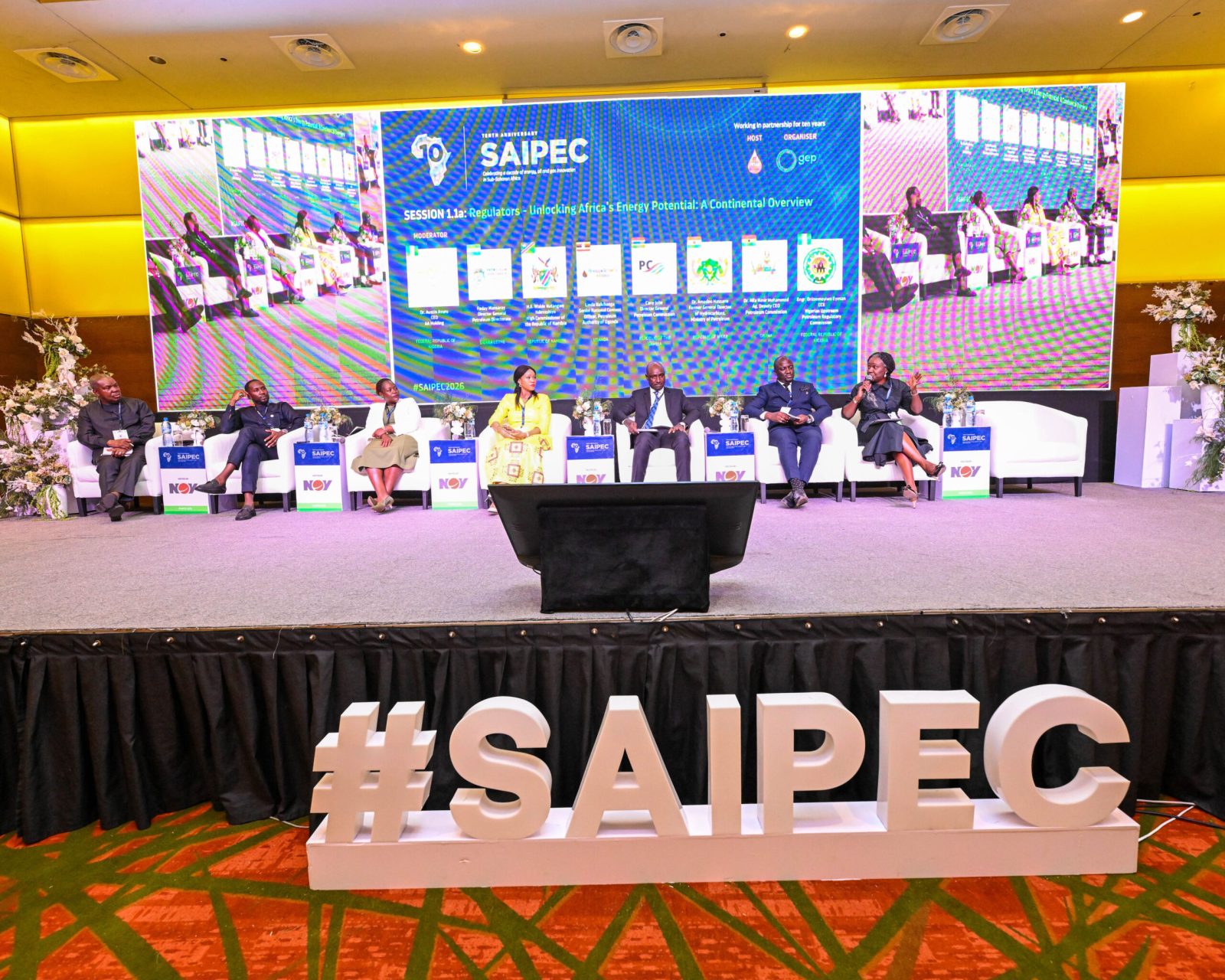

The Nigerian Upstream Petroleum Regulatory Commission (NUPRC) has formally invited the international investment community to capitalise on the nation’s 2025 licensing round, asserting that the legislative maturity of the Petroleum Industry Act (PIA) 2021 has established a premier destination for energy capital.
Mrs Oritsemeyiwa Eyesan, the Commission Chief Executive (CCE), delivered this clarion call during her keynote address at the opening ceremony of the 10th Anniversary of the Sub-Saharan Africa International Petroleum Exhibition and Conference (SAIPEC) 2026, held yesterday in Lagos.
Mrs Eyesan emphasised that the 2025 licensing round is meticulously designed to unlock Nigeria’s vast upstream potential within a regulatory environment characterised by transparency and predictability. The Commission has officially offered 50 oil and gas blocks across diverse terrains, marking a strategic shift towards responsible and accelerated resource development.
“This initiative reflects a targeted approach to responsible resource development,” the CCE stated. “We invite capable investors to participate and help realise Nigeria’s promising upstream potential under a framework that ensures fiscal stability and operational clarity.”
In a significant appraisal of the continental energy landscape, Mrs Eyesan noted that Africa’s investment outlook has undergone a remarkable transformation over the past three years. She revealed that the continent is now successfully competing for a larger share of global capital expenditure (CAPEX).
“Of the $520 billion projected in worldwide capital investment this year, Africa expects to attract between $48 billion and $50 billion—exceeding 8% of the global total,” she observed. “This represents a substantial increase from previous years, when the continent’s share languished below four per cent.”
The NUPRC head attributed this resurgence to renewed interest in both frontier and established basins, particularly within Nigeria, Namibia, and Mozambique.
Beyond the pursuit of foreign direct investment, Mrs Eyesan underscored the necessity of domestic and regional capital formation as a stabilising force. She highlighted that African independent operators are increasingly becoming the engine room of Nigeria’s upstream sector, driving both project execution and capital deployment.
A pivotal milestone in this indigenous financial evolution is the establishment of the Africa Energy Bank (AEB), which is headquartered in Nigeria.
“The creation of the Africa Energy Bank is a milestone of which we are immensely proud,” she remarked. “Unified support from stakeholders will be crucial to its success in providing the dedicated financing required for the continent’s unique energy needs.”
The CCE further highlighted the transformative impact of regional cooperation, particularly concerning gas development and power infrastructure. She noted that such collaboration is significantly enhancing energy access, reliability, and affordability across the sub-continent.
Through platforms such as the African Petroleum Regulators’ Forum (AFRIPERF), Mrs Eyesan maintained that African nations are successfully strengthening their collective voice on the global stage, ensuring that the continent’s energy transition and development goals remain at the forefront of international discourse.










Leave a comment