
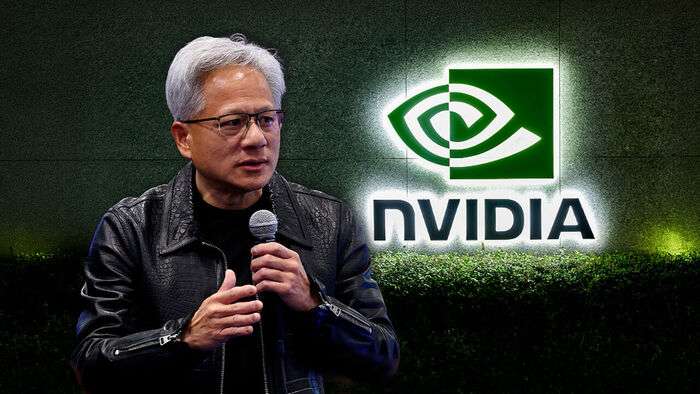

The artificial intelligence industry has been thrown into uncertainty following the resignation of Jensen Huang, co-founder and long-serving chief executive officer of Nvidia, amid mounting controversy over his reported relationship with a Chinese businesswoman suspected by United States authorities of espionage and allegations surrounding the diversion of billions of dollars’ worth of Nvidia chips to China.
Nvidia announced on Thursday, November 12, that Huang had resigned as president, chief executive officer and a member of the company’s board, with immediate effect. The company’s board appointed its Executive Vice-President and Chief Financial Officer, Colette Kress, as interim chief executive while it searches for a permanent replacement.
The board also appointed Harvey C. Jones, a long-serving director who has been associated with Nvidia since 1993, as its first-ever board chairman.
Although Nvidia did not formally state the reason for Huang’s departure in its announcement, his resignation followed days of damaging revelations about his personal and business relationships, an internal investigation and growing scrutiny of the company’s dealings with Singapore-based data-centre operator Megaspeed International.
Huang co-founded Nvidia in 1993 and transformed it from a graphics-chip manufacturer into one of the world’s most influential technology companies. Its graphics processing units (GPUs) have become central to the development and operation of artificial intelligence systems worldwide.
His departure therefore represents a significant leadership change for a company whose identity, technological direction and global business relationships have been closely associated with its founder.
The controversy intensified after reports emerged that Huang had been involved in an extramarital relationship with Alice Huang, a Chinese businesswoman and former senior executive at Megaspeed International.
The woman, who is not related to the Nvidia founder, has reportedly attracted the attention of US intelligence and security agencies over suspicions that she was recruited by China to gather information on Huang and Nvidia.
Huang acknowledged being unfaithful to his wife in a message to employees, taking responsibility for his conduct. However, the allegations that Alice Huang worked for Chinese intelligence have not been independently established publicly, and Beijing has rejected the espionage claims.
According to Reuters, Huang had previously described his interactions with Alice Huang to senior company officials as routine business engagements. Messages reviewed by the news agency reportedly showed that he later apologised for the affair.
Reuters also reported that Nvidia’s independent directors engaged the law firm Wachtell, Lipton, Rosen & Katz to investigate the allegations surrounding Huang’s relationship and the possibility of foreign intelligence involvement.
Further reports have raised questions about another alleged relationship involving an Nvidia employee who reportedly worked directly under Huang. These claims have added to concerns about corporate governance and the extent to which the company’s leadership may have been exposed to personal and professional conflicts.
Beyond the personal controversy, the more serious implications for Nvidia concern its business relationship with Megaspeed International and allegations that the company’s chips were diverted to Chinese customers in violation of US export restrictions.
A report by technology publication The Information alleged that relationships involving Huang and Alice Huang facilitated at least $7.5 billion in Nvidia chip sales that ultimately reached Chinese companies.
Megaspeed, which operates from Singapore, has been under scrutiny over suspicions that it helped Chinese businesses obtain advanced Nvidia processors through intermediaries and data-centre arrangements designed to circumvent American export controls.
The United States has restricted the export of advanced artificial intelligence chips to China on national security grounds. Nvidia has consequently faced limitations on its ability to supply some of its most sophisticated products to the Chinese market.
Reuters reported that Megaspeed had previously imported billions of dollars’ worth of Nvidia processors, while US authorities investigated whether some of the chips were subsequently transferred to customers in China.
However, the allegations have not resulted in a publicly established finding that Megaspeed violated export-control laws. The company has said it cooperated with US inspections.
The controversy has also attracted criticism within the US government. In a development reported by the Associated Press on Saturday, November 14, Treasury Secretary Scott Bessent criticised the Commerce Department for delaying restrictions on Nvidia chip exports to Megaspeed, saying several other government departments had supported adding the company to an export-control list.
The Justice Department is also investigating Megaspeed, while lawmakers from both major political parties are demanding explanations and greater scrutiny of the circumstances surrounding the alleged diversion of the chips.
The allegations could have significant consequences for Nvidia if investigations establish that substantial quantities of its processors were illegally diverted to China.
Beyond possible regulatory penalties, the company could face tighter export restrictions, more demanding compliance requirements and increased scrutiny of its international distribution arrangements.
The US government could also reconsider any plans to relax restrictions and permit Nvidia to resume sales of certain advanced chips to Chinese customers.
Such a development would threaten a potentially significant market for the company, although Nvidia has previously reported that its revenue from Chinese data-centre customers had fallen to virtually zero under existing restrictions.
Investors are also concerned about the possibility that previous revenue figures could come under scrutiny if investigators establish that a material proportion of the company’s sales was connected to prohibited transactions.
A proposed shareholder class-action lawsuit has already been filed, accusing Nvidia and Huang of misleading investors by allegedly failing to disclose material information about the controversy. The allegations in the lawsuit remain unproven.
Nvidia’s shares have suffered significant losses amid the controversy, adding to pressure on the company at a time when investors are already questioning the sustainability of the massive investment in artificial intelligence infrastructure.
Reuters reported on Saturday that the company’s shares had fallen by more than 30 per cent from their October 6 peak, wiping out more than $1.8 trillion in market value.
The market reaction reflects concerns not only about Huang’s departure but also about the potential impact of the investigations on Nvidia’s international business, regulatory exposure and future growth prospects.
Tesla chief executive Elon Musk also weighed in on the development, warning that Nvidia could lose important business deals without Huang because some commercial relationships depended heavily on the personal trust he had established with customers and partners.
Musk praised Huang’s management of Nvidia’s supply chain, suggesting that his departure could affect business arrangements that were built around the founder’s personal relationships.
Despite the uncertainty surrounding its leadership, Nvidia retains substantial technological and commercial advantages.
One of its strongest competitive advantages is its CUDA programming platform, introduced in 2006. The platform has become deeply embedded in the work of artificial intelligence researchers, software developers and computing companies, making it difficult for competitors to persuade customers to switch to alternative systems.
Its powerful GPU technology, established relationships with major technology companies and extensive software ecosystem have helped it maintain a leading position in the global AI chip market.
Nevertheless, Huang’s departure raises questions about whether the company can maintain the pace of innovation, strategic decision-making and customer engagement that characterised his leadership.
Kress will face the immediate challenge of reassuring investors, customers and employees that the leadership transition will not disrupt the company’s operations or product development.
Nvidia is scheduled to release its third-quarter fiscal 2027 financial results on Tuesday, November 17. The announcement will provide an important opportunity for the interim chief executive and the company’s management to address investors’ concerns about the leadership transition, the China controversy and the company’s financial outlook.
For Nvidia, the challenge is now considerably bigger than finding a successor to its celebrated founder. The company must demonstrate that its business practices, international distribution network and corporate governance can withstand intense regulatory and political scrutiny while preserving its position at the centre of the global artificial intelligence industry.
Whether Nvidia can achieve that without Huang at the helm remains one of the most consequential questions facing the technology sector.













Leave a comment