

By Dr. Gloria Boma Harry
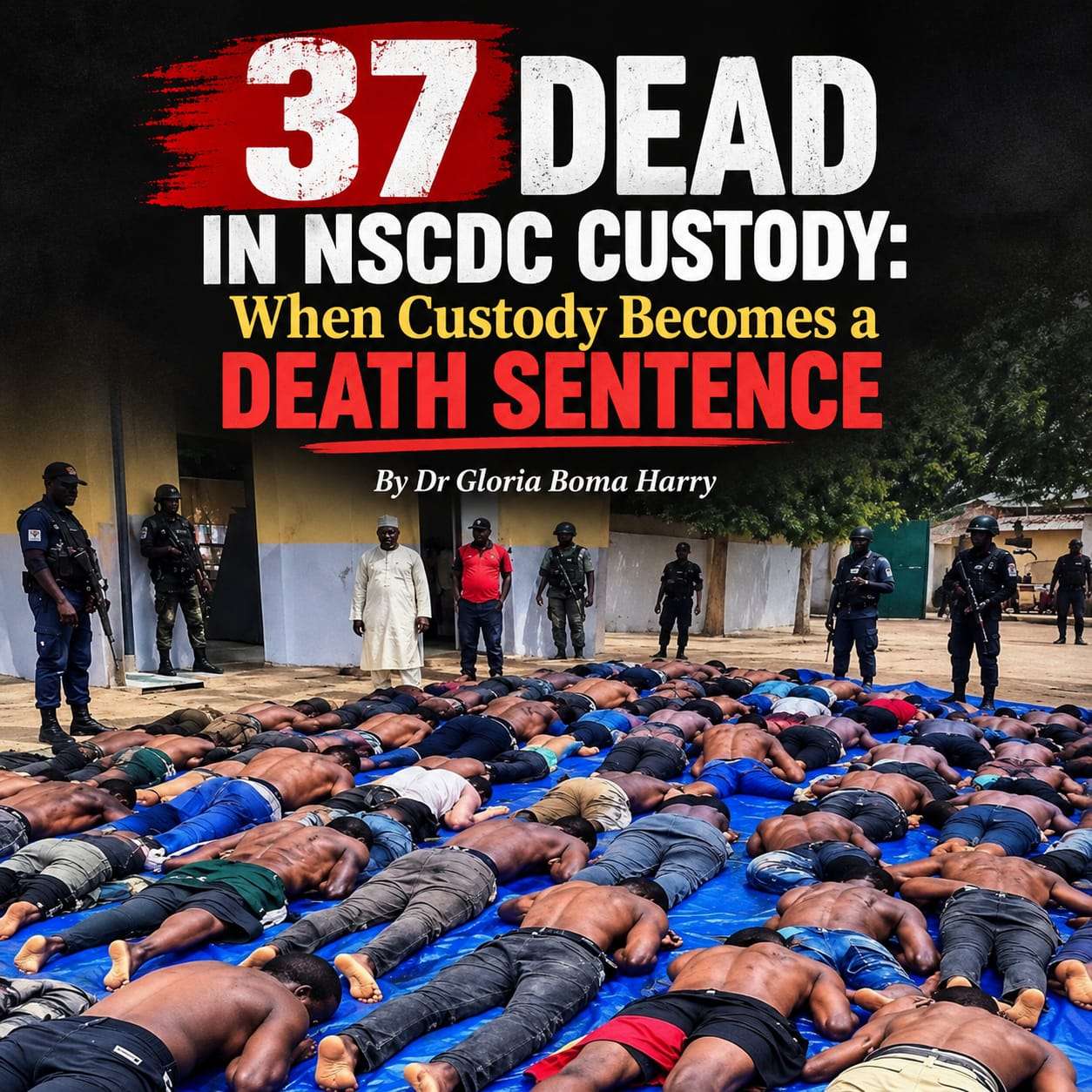
Imagine being arrested by the government and never making it out alive. Now imagine that happening to 37 people at once. That is the horror confronting Nigeria in Niger State.
Thirty-seven suspected illegal miners were taken into custody by the Nigeria Security and Civil Defence Corps (NSCDC). They were suspects, not convicted criminals. Yet they died while the state had absolute control over their freedom and responsibility for their welfare. That is the scandal.
The NSCDC has cited a suspected disease outbreak, while serious questions have been raised about the conditions in which the detainees were held. Were they overcrowded? Was there adequate ventilation? Were medical complaints ignored? Was help summoned quickly enough?
These are not minor administrative questions. They could determine whether this was an unavoidable tragedy or a preventable failure.
President Bola Tinubu has ordered an investigation and said anyone whose negligence or wrongdoing contributed to the deaths should face the law. The country should hold him to that promise.
Because Nigerians have watched this cycle before: deaths, outrage, suspensions, investigations then silence. Niger must not become another forgotten file.
A survivor has reportedly alleged that the mining site belonged to former military Head of State, retired General Ibrahim Badamasi Babangida. Babangida has denied any connection with the operation.
That allegation requires evidence, not political theatre. Investigators should establish who owned or controlled the site, who operated it, who benefited and whether officials knew about the mining activity.
But whatever the investigation finds about the mine, it cannot obscure the more immediate question: Why did 37 people die in government custody?
The state has a right to arrest suspected offenders. It does not have a right to treat their lives as expendable.
A suspect is not a convict. Custody is not a death sentence. And once government locks the door, government owns the responsibility for what happens behind it.
Let the investigation establish exactly what happened. If negligence contributed to the deaths, prosecute those responsible. If abuse occurred, expose it. If a medical emergency was mishandled, identify those who failed in their duty.
If the evidence clears officials of wrongdoing, publish the findings and let Nigerians see the facts. But let there be no convenient silence, no cosmetic suspension and no report quietly buried in an official cupboard. Thirty-seven families are waiting for answers.
So here is the challenge to the Federal Government: Do not merely investigate the 37 deaths. Investigate the system that allowed 37 people to die under its watch.
And when the truth is found, do not protect the institution at the expense of the dead.
Because the credibility of government will not be measured by how loudly it condemns illegal mining.
It will be measured by whether it can hold its own officers accountable when the victims are already behind a government-locked door.
Dr. Gloria Boma Harry writes from Port Harcourt, Rivers State gloriab4real@gmail.com









Leave a comment