
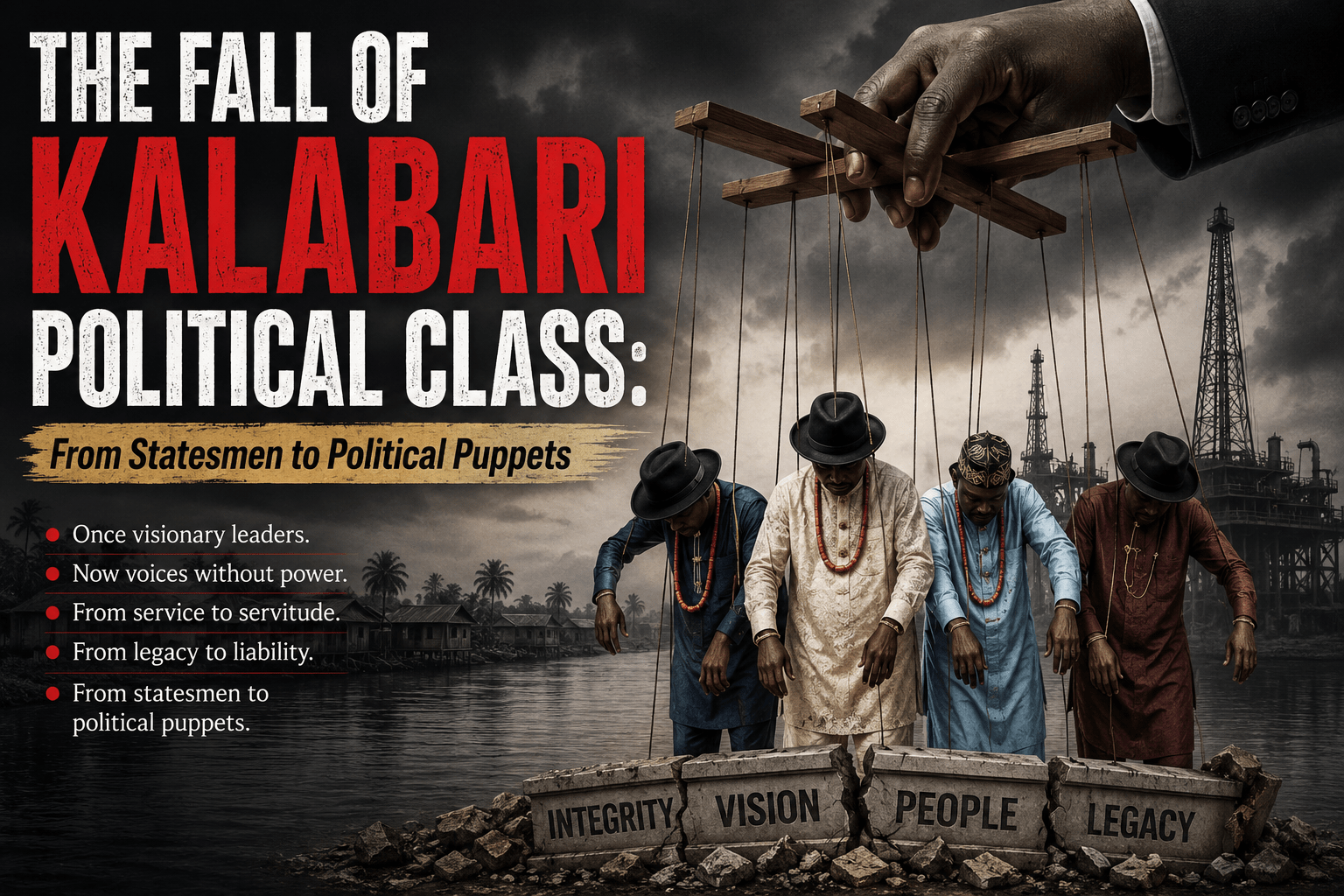

As a little boy, I grew up seeing the Kalabari man as a proud and contented person — one who would not sell his dignity for anything. He walked with his head held high, dressed in his George wrapper and long Etibo shirt, made from China white fabric, with an handkerchief tied around his neck. The Kalabari man of yesterday had dignity.
But that was then.
In the past, Kalabari land was adorned with brave ancient warriors and chiefs who defended the land and protected its people at all costs.
But that is now history.
Kalabari sons and daughters in top government positions attracted enormous development to Kalabari land, contributed to the advancement, growth and development of Rivers State and Nigeria. They held high positions in the civil service, the judiciary, the business community and in politics. These Kalabari sons and daughters were respected in the country and beyond.
That was then too.
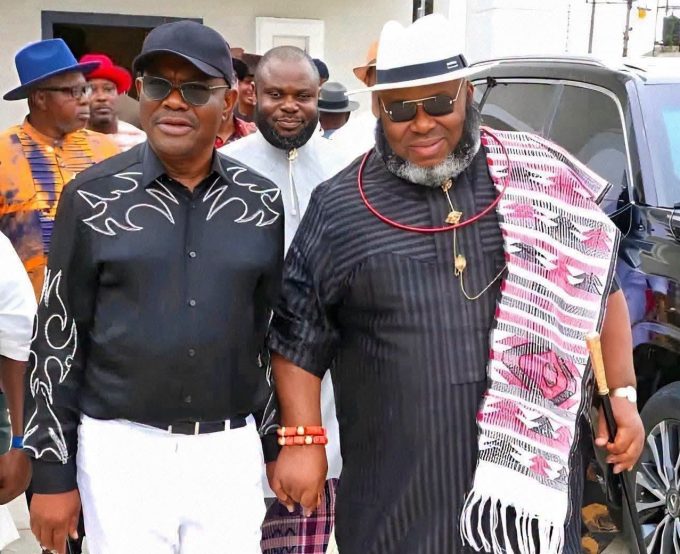
Today, top Kalabari politicians – current and former political officeholders, are chronic sycophants, bootlickers and samba dancers. They make huge fortunes in the lucrative business of praise singing and betraying their people. They shout and sing at the top of their voices and dance shamelessly, outperforming each other in the absurd drama of shame.
Today, Kalabari political leaders swallow insults and humiliation, wear dishonour as pride and happily declare themselves as slaves just to be seen in government circles and in the corridors of power. They disgrace Kalabari, and they do it with pride.
Majority of them are cultists, some are terrorists and leaders of private militias that unleash violence, terror and bloodshed on their own people. They kill their people and spread fear in their towns and villages in order to remain in the good books of an outsider godfather.
It is difficult to believe that the current Kalabari political leaders are true descendants of the proud and brave Kalabari chiefs and warriors of old.
It is unbelievable that these political traders and dealers are the current replacements for highly respected Kalabari men such as: Chief P.G. Warmate, Chief GKJ Amachree, Chief Nabo Graham-Douglas, Chief Wenike Briggs, Dr. M.T. Akobo, Ambassador Joe Iyalla, Chief R.R. Briggs, Chief S.K. Dagogo-Jack, Chief T.O. Graham-Douglas etc.
What a drastic and painful downgrade — from statesmen to puppets and political contractors; from independent voices to political dependants; from community defenders to agents of external interests and saboteurs.
To make matters worse, these spineless bloodsuckers have invaded the Kalabari chieftaincy institution. They have taken over ancient warrior stools and thrones, walking about in overflowing robes, sticks and helmets and bearing highfalutin titles.
But unlike their forebears, who defended, promoted and built Kalabari land, these weaklings that camouflage as leaders, conspire with external forces to despoil their own land and betray their own people. They are the internal colonisers who broker deals with outsiders to overrun Kalabari land. They forget that they had raised the cannonball and sworn to defend Kalabari land.
Kalabari, that once produced intellectuals, diplomats, administrators and statesmen, is now being led by political contractors whose sole ambition is personal gain. Leaders who are ever willing to sacrifice the collective dignity of their people. They pin Kalabari to the ground and wave at the adversary to come and take her for a fee. They assure opponents that Kalabari will always be brought as a lamb to the slaughter.
This is not political leadership. It is political servitude and surrender.
These so-called Kalabari political leaders take delight in seeing crowds of youths flock around them like fowls around a bowl of grain. The larger the singing and gyrating crowds that follow them, the greater the perceived prominence of the politicians.
But what has this “power show” delivered for Kalabari land?
Today, Kalabari people are only remembered for what they were in the past, when they mattered in the scheme of things. They are spoken of as objects of history and archives. They have not only surrendered political power; they have lost political courage. They now go to great lengths just to be hired by whoever is in power.
But there is an opportunity to make amends and change the course of history.
There has been no time, in modern Kalabari political history that is as crucial as now. Kalabari-Ijaw collective destiny is at stake. 2027 is a political crossroad and a defining moment. The consequences will affect generations unborn. This is the time for the Kalabari political class to stop and think.
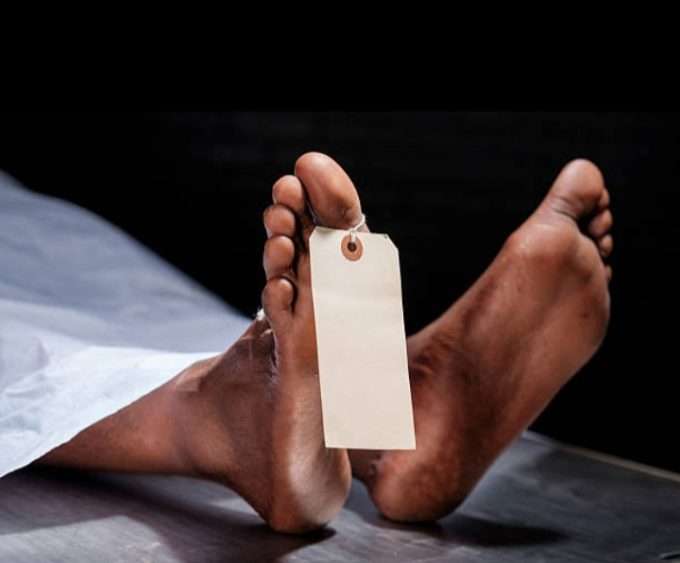
Should they be remembered as the generation that stood up and restored the pride of Kalabari in the nick of time or as the generation that put the final nail in the coffin of Kalabari collective destiny?
History beckons
Amatemeso watches
Egberi fáá!
Sotonye Ijuye-Dagogo
writes from Port Harcourt
18/08/26








Leave a comment