
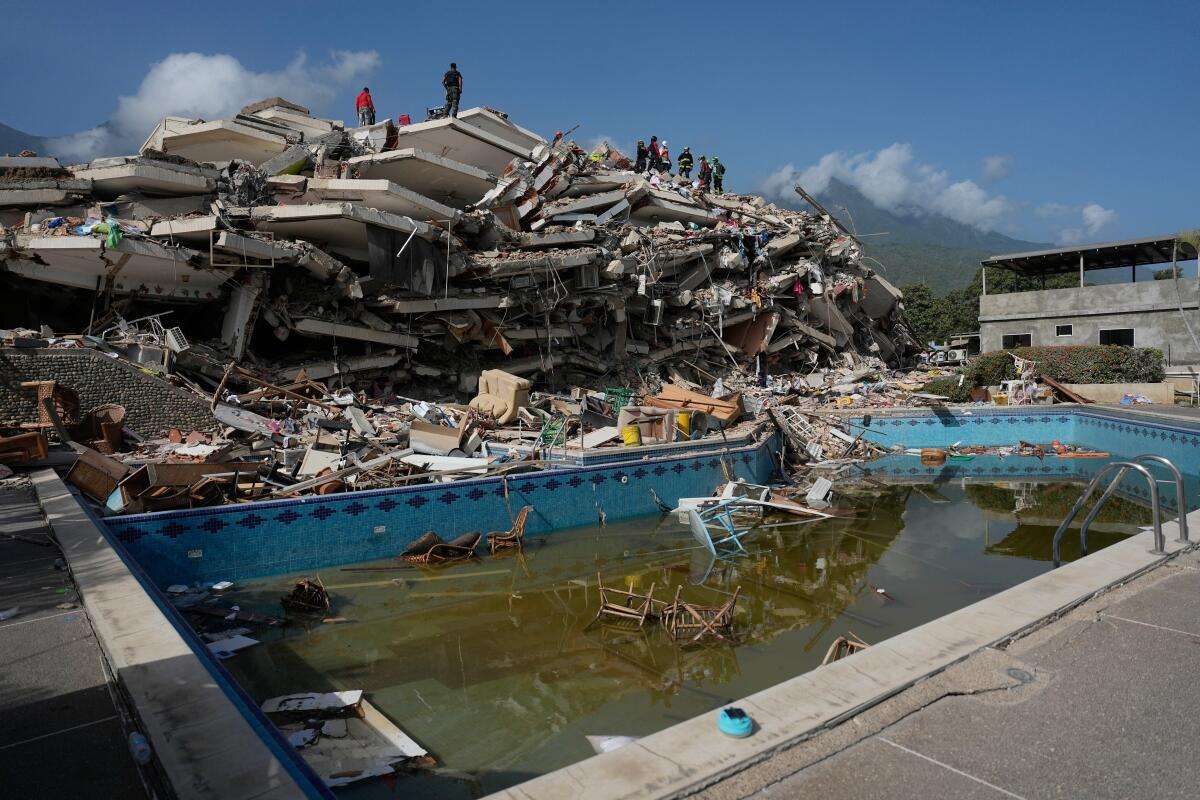

Desperation and public fury have reached a breaking point in the state of La Guaira, as the confirmed death toll from the devastating double earthquake that struck the nation mid-week surged to 1,430. Three days after the back-to-back 7.2 and 7.5 magnitude tremors, thousands of families remain in a state of anguish, with at least 68,900 people officially reported missing.
As the critical 72-hour window for rescue operations closes, the atmosphere on the ground is one of profound grief punctuated by escalating civil unrest.
In the coastal town of Caraballeada, survivors and grieving relatives have taken matters into their own hands, using basic tools like shovels, ropes, and their own bare hands to sift through mounds of pulverised concrete. Among the debris, discarded remnants of daily life, such as children’s toys and household goods, lie scattered under a thick layer of dust.
For many, hope is now tethered to the arrival of international rescue teams. By Saturday, seventeen flights carrying over 1,600 specialist personnel from nations including the United States, Mexico, Brazil, France, and El Salvador had landed. Their arrival has provided a glimmer of hope to families who believe the domestic state response has been woefully inadequate.
Tensions peaked on Saturday as citizens confronted government personnel. Frustration, long simmering due to the country’s decade-long economic instability, has boiled over, with many residents accusing the authorities of prioritising optics over actual relief.
In one instance, civilians blocked an excavator from leaving a collapse site after witnessing state workers apparently staging scenes for photographs rather than engaging in recovery efforts. “They came to eat arepas and take pictures to make it look like they were working,” said local resident Yeison Marcano. “They didn’t even get their uniforms dirty like we have.”
Acting President Delcy Rodríguez has stated that over 14,000 military and police personnel are patrolling the disaster zones, where access is currently restricted by special permits. However, residents in the hardest-hit areas report a lack of meaningful support from national forces, citing a disconnect between the state’s projected image and the grim reality on the ground.
Despite the mounting anger, small miracles continue to emerge from the wreckage. Reports confirmed the rescue of an 18-day-old infant in pink blankets following a 12-hour operation, and a 69-year-old woman was successfully pulled to safety by a Salvadoran team.
Experts from the International Organization for Migration estimate that as many as six million people could be affected by the disaster, including two million in the capital, Caracas. The logistical challenge is compounded by severe damage to the Simón Bolívar International Airport, though international teams are currently working to repair the runway to maintain vital supply lines.
As the sun set on the third day, the stench of decomposition grew in the sweltering heat, and the sound of helicopters remained a constant backdrop to the search. For those still combing through the rubble, the mission remains urgent and uncompromising.
“It doesn’t matter who it is, whoever, whether it’s family or somebody else,” said Yonahí Regalado, who has been searching for her sister and nephew since the disaster began. “If there is anyone alive, let’s get them out.”







Leave a comment