
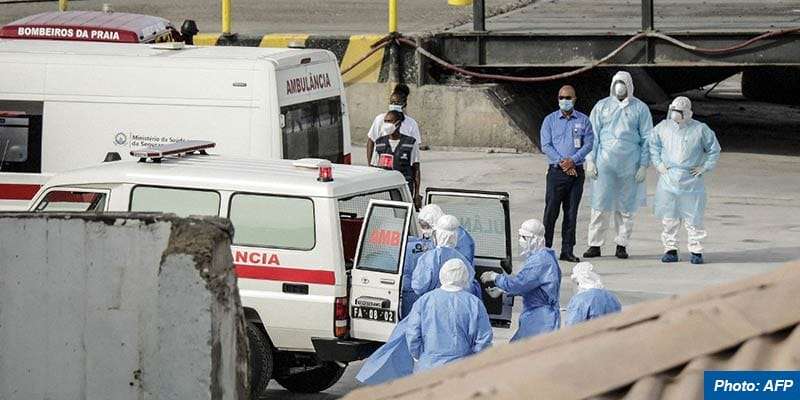

The Director-General of the World Health Organization (WHO), Dr Tedros Adhanom Ghebreyesus, has arrived in the Canary Islands to coordinate the high-stakes evacuation of the MV Hondius, a cruise ship crippled by a deadly hantavirus outbreak.
The Dutch-flagged vessel arrived off the industrial port of Granadilla early on Sunday morning, carrying 146 passengers and crew members. The arrival follows a harrowing several weeks at sea during which eight individuals fell ill and three tragically lost their lives.
In a rare personal plea directed at the residents of Tenerife, Dr Tedros sought to alleviate fears of a burgeoning pandemic. Acknowledging the lingering trauma of 2020, he issued a firm assurance via social media that the current situation bears no resemblance to the early days of the coronavirus.
“This is not another COVID-19,” Dr Tedros wrote. “The risk to the local population is low. You will not encounter [the passengers]. Your families will not encounter them.”
WHO spokesman Christian Lindmeier echoed this sentiment, clarifying that while the Andes strain detected on board is known for rare human-to-human transmission, it is not “that contagious that it easily jumps from person to person.”
Spanish emergency services, led by Virginia Barcones, have implemented a “corridor of safety” to ensure the evacuation remains entirely isolated from the public. The planned protocol includes: Offshore Screening: Passengers are being screened by medical teams in hazmat suits before being ferried to the dock in groups of five to ten via small boats. Guarded Transit: Once ashore, passengers are transferred directly into isolated and guarded vehicles. Direct Repatriation: Evacuees are being taken to a cordoned-off section of the airport to board waiting repatriation flights.
Spanish nationals are expected to be the first to disembark, followed by flights destined for the Netherlands, the United Kingdom, and Australia. Those remaining on the vessel or returning home are being asked to observe an isolation period of 42 days.
Despite the stringent measures, the arrival has sparked concern among some residents and political groups. The anti-establishment group Iustitia Europa has called for the vessel to be barred from Spanish shores, arguing that the Canary Islands should not become “Europe’s health laboratory.”
Conversely, local business owners like Alicia Rodriguez noted that while the ship is “the talk of the town,” there is a cautious hope that authorities will manage the situation with the least possible risk.
Health authorities on four continents are currently tracing over two dozen passengers who disembarked from the MV Hondius in late April, before the hantavirus was confirmed on 2 May.
Preliminary investigations suggest the outbreak may have originated with a Dutch couple who had spent months bird-watching in South American regions where rodents are known carriers of the Andes virus. The WHO confirmed that a health officer, alongside officials from the European Centre for Disease Prevention and Control (ECDC), remains on board to conclude the investigation into how the virus spread within the close quarters of the ship.











Leave a comment