

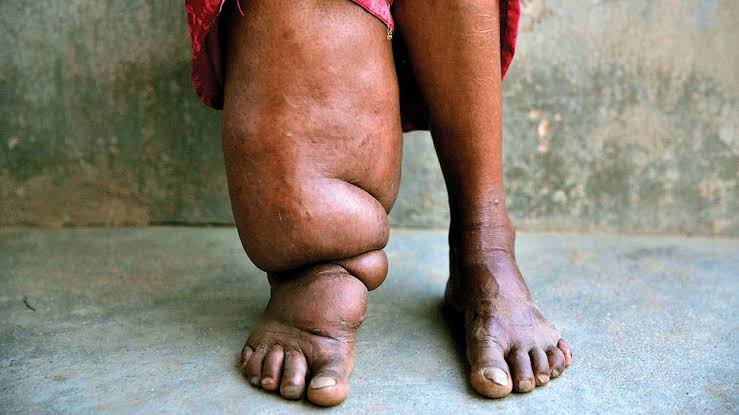

In the quiet, humid villages of the tropics, a parasite no thicker than a strand of hair is waging a war of attrition against millions. Lymphatic Filariasis (LF) often known by its more haunting name, Elephantiasis, is not a disease that kills quickly. Instead, it steals lives by degrees, transforming healthy limbs into heavy, painful burdens and turning productive citizens into social outcasts.
But a global movement is now reaching a tipping point, and for the first time in history, we are closer than ever to wiping this ancient “neglected” disease off the map.
A Midnight Passenger
The biology of LF is as fascinating as it is cruel. The disease begins with a simple mosquito bite, usually at night. The mosquito injects microscopic larvae that migrate to the human lymphatic system, the body’s “internal plumbing” responsible for fluid balance and immune defense.
For years, the infection remains a “silent” passenger. While the patient feels healthy, adult worms are maturing in the lymph nodes, living for nearly a decade and producing millions of larvae. By the time the symptoms appear, massive swelling of the legs or arms and the hardening of the skin, the damage to the body’s drainage system is often irreversible.
Beyond the Physical: The Price of Stigma
“It is a disease of the poor,” says global health experts. LF thrives where sanitation is low and housing is vulnerable. However, the true burden isn’t just the physical weight of a swollen limb; it is the economic and psychological toll.
In many endemic regions, those with visible symptoms are barred from marriage, excluded from community gatherings, and unable to work in fields or factories. This creates a devastating cycle: the disease traps the patient in poverty, and poverty prevents the patient from accessing the simple hygiene tools needed to manage the condition.
The Strategy for Victory
The World Health Organization (WHO) isn’t just managing the disease; they are trying to kill it. The weapon of choice? Mass Drug Administration (MDA).
Rather than testing every individual, health workers treat entire communities once a year with a powerful cocktail of anti-parasitic medicines. These drugs “sweep” the blood clean of larvae, ensuring that when a mosquito bites an infected person, it has nothing to pass on to the next victim.
To date, several countries, including Thailand, Egypt, and Vietnam have been validated by the WHO as having successfully eliminated LF as a public health problem.
The Path Forward
Despite the progress, millions remain at risk. The challenge now lies in “the last mile”, reaching remote conflict zones and urban slums where healthcare infrastructure is crumbling.
For the person already living with the chronic stage of the disease, the message is one of hope and dignity. Simple interventions, like rigorous washing with soap and water and elevation of the limbs, can prevent the painful secondary infections that make the condition so unbearable.
Lymphatic Filariasis is a test of our global conscience. We have the medicine, we have the strategy, and we have the proof that it works. The only question remains: do we have the sustained will to finish the job?
How You Can Help: Support international health NGOs providing MDA treatments and education. Awareness is the first step in stripping away the stigma that keeps this disease in the shadows.












Leave a comment