

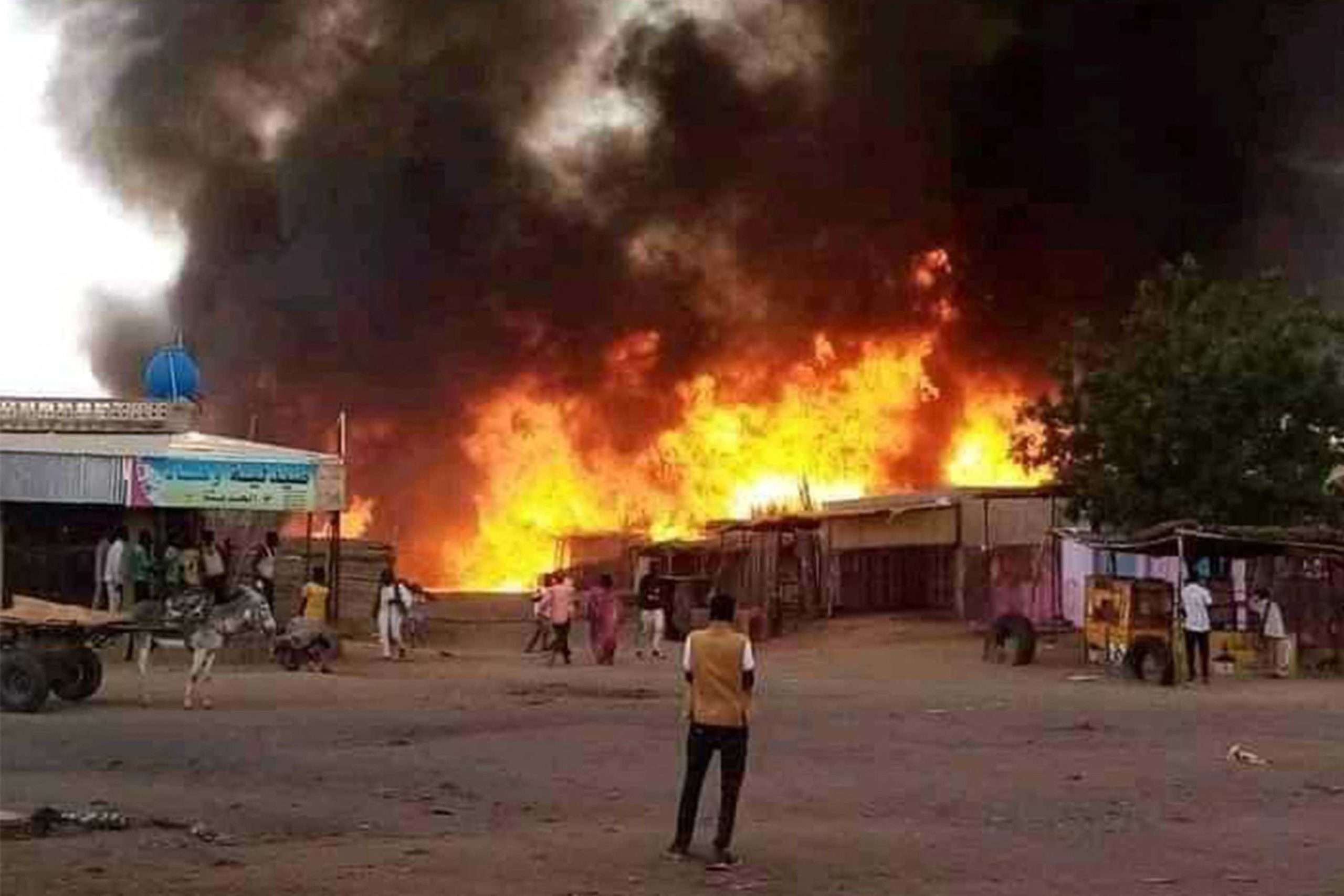

The civil war in Sudan, a protracted catastrophe now exceeding 1,000 days of hostilities, has begun to breach its western frontiers, threatening to pull the Republic of Chad into a regional conflagration. The recent escalation has placed N’Djamena in a precarious position, as the government struggles to contain the spillover from a conflict that is increasingly destabilising its own fragile political order.
On 17 January, the Chadian government issued a stern “final warning” following a series of lethal incursions by Sudan’s Rapid Support Forces (RSF). During a press conference, government spokesperson Gassim Cherif confirmed that seven Chadian soldiers were killed on 15 January when RSF units pursued army-affiliated militias across the border into Chadian territory.
“We cannot have our defence and security forces dragged into the conflict,” Mr Cherif stated, following the skirmish near the border garrison of Birak. The RSF reportedly attacked the garrison, resulting in casualties and the destruction of several military vehicles.
A Region Under Siege
The violence is centred around the remote northern reaches of Sudan’s North Darfur state. The towns of Tine, Ambara, and Karnoi represent the final vestiges of resistance against the RSF in the Darfur region. Following the fall of the state capital, El Fasher, in late October 2025, an event marked by the reported deaths of tens of thousands and a total depopulation of the city, the Sudanese Armed Forces (SAF) lost their last major foothold in the west.
The RSF has since focused its efforts on eliminating the remaining pockets of “Joint Force” militias and local “Popular Resistance” groups. This pursuit has frequently ignored international boundaries. In December, two Chadian soldiers were killed in a drone strike on a military camp, an attack for which both Sudanese factions have traded blame.
The Deby Dilemma
The escalating border violence has sharpened the internal contradictions facing Chadian President Mahamat Déby. While international reports have frequently suggested that Chad has facilitated the transit of weapons from the United Arab Emirates to the RSF, the paramilitary group’s conduct on the ground is alienating Déby’s own power base.
The RSF’s campaign in Darfur has been characterised by the systematic targeting of non-Arabic speaking communities, most notably the Zaghawa ethnic group. President Déby himself hails from the Zaghawa, who dominate the upper echelons of the Chadian military. The sight of their kinsmen being “cleansed” across the border, coupled with direct attacks on Chadian troops, has sparked significant discontent within the army.
President Déby is currently performing a delicate diplomatic balancing act: maintaining his essential ties with France while attempting to project a more assertive sovereignty to satisfy a domestic public increasingly weary of perceived neo-colonial influence.
A Humanitarian Tsunami
Beyond the military provocations, the 1,400km border is buckling under the weight of a massive humanitarian crisis. In the border town of Adré, the population has increased tenfold since the start of the war in April 2023. This influx has decimated the local economy, causing a surge in prices and unemployment, while the lack of infrastructure has raised the spectre of cholera outbreaks.
Between 22 December and 16 January alone, fighting in the Tine sector has displaced a further 18,000 families toward the border. Local monitors report that at least 103 civilians have been killed in this latest wave of violence, with no sign of a cessation in hostilities as the RSF and the Joint Forces continue to contest the fluid frontline.
As the “fuse” lit in Khartoum nearly three years ago continues to burn through the Sahel, the “reality” for Chad is no longer one of mere proximity, but of an existential threat to its own national stability.











Leave a comment