

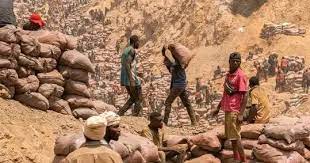

A profound tragedy has struck central Nigeria following a catastrophic incident at a mining site in Plateau State, resulting in the deaths of at least thirty-seven miners. The victims reportedly succumbed to carbon monoxide poisoning during the early hours of Wednesday morning.
The incident occurred in the Kampani community, situated within the Wase local government area. According to reports from the Reuters news agency, which cited both police sources and internal security documentation, a further twenty-five individuals have been hospitalised and are currently receiving medical attention for various degrees of respiratory distress.
Government officials have identified the site of the disaster as a dormant lead mine. It is understood that a significant accumulation of minerals within the disused shaft resulted in the release of lethal fumes. Nigeria’s Minister of Solid Minerals, Dele Alake, stated that the accident transpired when local villagers, unaware of the presence of toxic emissions, entered the tunnel to extract minerals.
In response to the calamity, the Plateau State government confirmed that while many were feared dead, the precise toll remained subject to verification. Security forces have since cordoned off the area to prevent further entry, and the Federal Government has ordered an immediate suspension of all mining activities in the vicinity to facilitate a comprehensive investigation.
A Persistent Shadow of Informality
This latest disaster underscores the persistent dangers associated with illegal mining operations in Nigeria. Such activities frequently occur without government oversight or adherence to fundamental safety protocols. While Plateau State remains a historically significant mining region, its capital, Jos, is colloquially known as ‘Tin City’, the lack of regulation continues to claim lives.
The tragedy in Wase follows a grim pattern of similar accidents. Last year, eighteen miners were killed in Zamfara State when a boulder collapsed onto an illicit site during heavy rainfall.
Continental Crisis
The pursuit of mineral wealth across the African continent continues to be shadowed by a recurring cycle of disasters. The Nigerian tragedy follows closely on the heels of a massive collapse at the Rubaya coltan mine in the Democratic Republic of the Congo last month, where an estimated 200 people were killed following a landslide.
The Rubaya mine is a critical link in the global supply chain, producing approximately fifteen per cent of the world’s coltan. The mineral is processed into tantalum, a heat-resistant metal essential for the manufacture of mobile phones, aerospace components, and gas turbines.
As authorities in Abuja launch their inquiry into the Wase incident, the international community is once again reminded of the human cost involved in the extraction of the world’s most sought-after resources.












Leave a comment