


Three weeks into an intensifying conflagration in the Middle East, the Iranian government issued a chilling threat on Friday to expand its retaliatory strikes to include recreational and tourist destinations worldwide. This escalation occurred as the United States announced a significant surge in its regional presence, deploying further warships and Marines to the theatre of war.
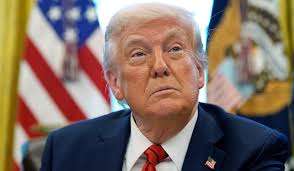
In a characteristic display of geopolitical dissonance, President Donald Trump asserted on social media mere hours later that his administration was considering “winding down” military operations. The President’s remarks followed a volatile spike in oil prices that triggered a sharp downturn in the United States stock market.
Despite the President’s conciliatory rhetoric, the administrative and military machinery in Washington appears to be pivoting toward further engagement. The U.S. is currently deploying three additional amphibious assault ships and approximately 2,500 Marines to the region, joining a contingent that already exceeds 50,000 personnel. Furthermore, the White House has requested an additional $200 billion (£158 billion) from Congress to finance the ongoing hostilities.
President Trump maintained that while he retains “all options,” he currently has no intention of deploying ground forces into Iranian territory. “We are getting very close to meeting our objectives as we consider winding down our great Military efforts,” he stated.
In a desperate bid to stabilise soaring energy costs, U.S. officials announced a one-month licence to lift sanctions on Iranian oil currently stranded at sea. This temporary reprieve, set to expire on 19 April, aims to mitigate the “choking off” of global supplies which has driven Brent crude to approximately $108 per barrel.
Treasury Secretary Scott Bessent suggested the pause was also a strategic manoeuvre to prevent China from becoming the sole beneficiary of discounted Iranian crude. Simultaneously, Washington has eased sanctions on specific Russian oil shipments to bolster global supply chains during the crisis.
The conflict has exacted a harrowing human toll. Iranian state television confirmed that General Ali Mohammad Naeini, a spokesperson for the Revolutionary Guard, was killed in a recent airstrike. This follows the deaths of several other high-ranking officials, including the head of the Supreme National Security Council.
Supreme Leader Ayatollah Mojtaba Khamenei, who has not been seen in public since assuming power following the death of his father in an Israeli strike, issued a written statement marking Nowruz (Persian New Year). He praised the “steadfastness” of the Iranian people and dismissed the U.S.-Israeli strategy as a futile “illusion” of regime change.
The prospect of the conflict transcending regional borders was heightened by General Abolfazl Shekarchi, Iran’s senior military spokesperson. He warned that “parks, recreational areas and tourist destinations” across the globe would no longer be safe for “enemies” of the state.
In response to the deteriorating security environment in Iraq, NATO’s top commander, General Alexus Grynkewich, confirmed the relocation of several hundred advisory personnel to Europe. This follows a succession of Iranian attacks on British, French, and Italian bases within Iraq. Meanwhile, the British government has granted the U.S. permission to utilise UK bases for operations intended to secure the strategic Strait of Hormuz.
Explosions resonated across the region on Friday, a day of profound religious significance. In Dubai, air defences intercepted incoming fire as residents observed Eid al-Fitr, the conclusion of Ramadan. In Jerusalem, missile fragments struck the periphery of the Old City, endangering sites hallowed by Jews, Christians, and Muslims alike.
Current estimates indicate that over 1,300 individuals have been killed in Iran, while Israeli strikes in Lebanon have displaced more than one million people and resulted in over 1,000 fatalities. U.S. military casualties currently stand at thirteen. As the conflict enters its fourth week, the path toward de-escalation remains obscured by contradictory messaging and relentless kinetic activity.








Leave a comment