

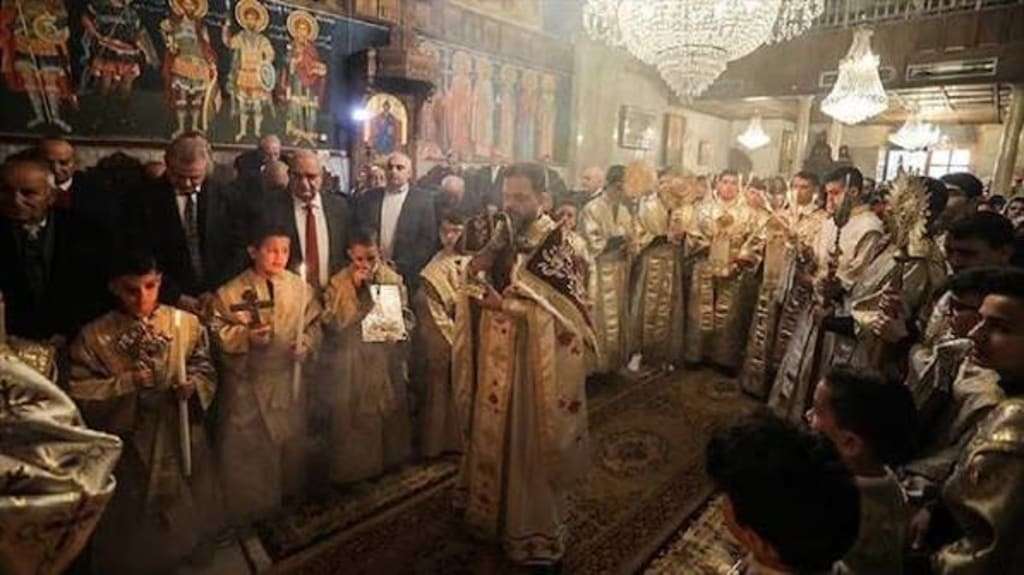

Whilst much of the Western world has long since dismantled its festive decorations and returned to the rigours of the working year, for approximately 250 million Christians across the globe, January 7 marks the most hallowed day of the liturgical season. From the snow-dusted cathedrals of Eastern Europe to the historic parishes of Egypt and Palestine, the air is filled with the incense and ancient hymns of Christmas Day.
To the uninitiated, the discrepancy in dates might suggest a theological disagreement regarding the birth of Jesus Christ in Bethlehem. However, the schism is not one of divinity, but of chronometry.
A Tale of Two Calendars
The root of this temporal divide lies in the late 16th century. In 1582, Pope Gregory XIII introduced a fundamental reform to timekeeping. He decreed that the Catholic Church should adopt what is now known as the Gregorian calendar, designed to replace the Julian calendar, a system established by Julius Caesar in 46 BC.
The Julian calendar, though a marvel of its era, possessed a subtle but significant flaw: it overestimated the solar year by approximately 11 minutes. This meant that for every 128 years that passed, the calendar drifted one full day out of alignment with the Earth’s actual orbit around the sun.
The Great Leap Forward
By the time of the Pope’s intervention, the Julian system had accumulated a ten-day discrepancy. To rectify this and ensure that spring equinoxes and Easter remained seasonally appropriate, the world was essentially required to “skip” ten days.
While the majority of the Western world eventually embraced the Gregorian system, which is vastly more accurate, losing a mere day every 3,236 years, numerous Orthodox and Eastern Christian churches chose to remain steadfast. For these communities, the Julian calendar is not merely a method of counting days, but a preserved tradition that connects them to the early centuries of the faith.
A Global Celebration
The 7th of January corresponds to the 25th of December on the ancient Julian calendar. It is a day of profound significance for the Coptic Orthodox in Egypt, the Ethiopian Orthodox, and the various Eastern Orthodox churches in Russia, Serbia, and Ukraine.
In Bethlehem, the very birthplace of the Nativity, the celebrations take on a particularly poignant resonance. As the bells toll over Manger Square, they serve as a reminder that whilst the world may be divided by calendars and centuries of history, the essence of the message remains universal.
For these millions of believers, the celebration is a testament to the endurance of tradition in an ever-accelerating modern world.












Leave a comment