

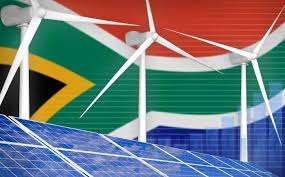

South Africa continues to consolidate its position as the pre-eminent force in Africa’s shift towards sustainable power, offering an expanding portfolio of investable opportunities across wind, solar, biofuels, and green hydrogen. This assessment forms the core of the latest ‘Powering Africa’s Future Energy’ report by Forvis Mazars, released on 12 January.
The report reveals that South Africa generated in excess of 50 TWh from renewable sources throughout 2024. This impressive output includes 10.1 TWh from hydroelectric power, 9 TWh from wind, and 8 TWh from solar, with an additional 27.1 TWh provided by other renewable technologies. These figures confirm the nation’s status as the continent’s leading producer of clean energy.
Johan Marais, a director at Forvis Mazars, noted that the nation’s success is built upon a foundation of “exceptional resources” and “recent policy progress.” Central to this is the Renewable Energy Independent Power Producer Procurement Programme (REIPPPP), which the report identifies as a regulatory blueprint that has influenced energy policy across the African continent.
While solar capacity across Africa grew by 25% in 2024, the surge has been most pronounced in Southern Africa. Beyond traditional renewables, South Africa is ideally positioned to become a global hub for green hydrogen production and export, driven by high European demand and a unique combination of solar and wind potential.
The nation is not merely focusing on generation but is also investing heavily in the infrastructure of the future, including:
- Carbon Capture Solutions: Advanced pilot initiatives to mitigate industrial emissions.
- Smart Grids and Mini-grids: Enhancing rural electrification and grid resilience.
- Critical Minerals: Maintaining a substantial contribution to the global supply of platinum group metals, cobalt, and titanium—elements essential for the global energy transition.
Mr Marais highlighted that the Integrated Resource Plan 2019 and the Energy Action Plan 2022 remain pivotal. These frameworks aim to systematically reduce the nation’s historical reliance on coal in favour of a diversified mix that includes robust storage solutions and independent private production.
The transition is being managed alongside significant legislative updates in the hydrocarbon sector. President Cyril Ramaphosa signed the Upstream Petroleum Resources Development Act into law in 2024. Although not yet in force, the Act is designed to create a more “investor-friendly environment” for oil and gas exploration while ensuring local participation.
The report suggests that the expansion of private generation, coupled with these evolving upstream frameworks, has led to a surge in demand for expert guidance. Investors are increasingly seeking to understand how to “structure resilient projects” that can capitalise on these policy shifts.
With a population exceeding 63 million and a GDP of approximately $400 billion, South Africa remains a continental economic heavyweight. The report concludes that continued investment in renewable infrastructure, supported by a stable and transparent regulatory environment, will be the key to ensuring long-term energy security and inclusive economic growth.












Leave a comment