



President Bola Tinubu has ordered the immediate suspension of the controversial “cashless” payment policy at airport toll gates, following widespread public outcry and significant travel disruptions across the country.
The policy, which was implemented by the Federal Airports Authority of Nigeria (FAAN) on 1 March, required all payments for parking, toll gates, and other access points to be made digitally via “Go Cashless” cards or Point of Sale (POS) systems. This mandate sought to modernise a system that had relied on cash collection for over five decades. However, the abrupt transition caused severe traffic congestion, with many air passengers at the Murtala Muhammed International Airport in Lagos and the Nnamdi Azikiwe International Airport in Abuja reportedly missing their flights.
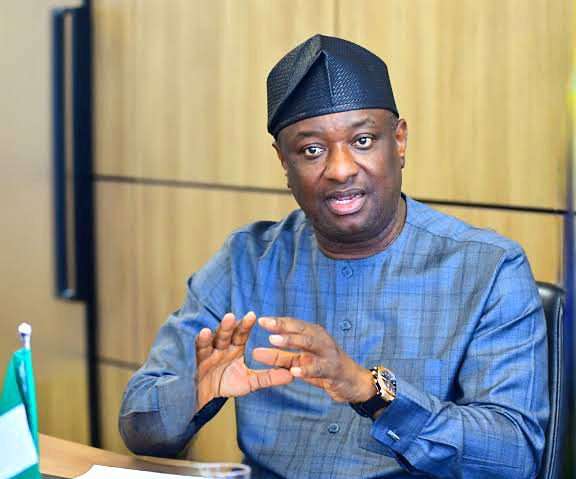
The decision was announced by the Minister of Aviation and Aerospace Development, Festus Keyamo, following a meeting of the Federal Executive Council (FEC) in Abuja on Wednesday.
Minister Keyamo clarified that the government remains committed to eliminating corruption and optimising revenue streams, but stressed that the President intervened due to the immediate hardship the policy inflicted upon the travelling public.
“Mr. President was very concerned about the health of Nigerians and the fact that many were losing their flights,” Mr. Keyamo stated. “Out of empathy, he directed that we should suspend the current system because it is creating a lot of ripple effects and Nigerians are suffering as a result.”
To mitigate the inconvenience, the Ministry has directed FAAN to revert to the status quo temporarily. A hybrid system will be adopted, allowing for both cash payments and the use of the newly introduced digital cards, while the government returns to the “drawing board” to refine the process.
Mr. Keyamo noted that the government intends to partner with private sector entities to devise a more efficient, automated payment infrastructure that eliminates cash handling without sacrificing accessibility. Further briefings from FAAN are expected once consultations are concluded.
In a separate development during the FEC meeting, President Tinubu approved the comprehensive re-scoping and re-awarding of the long-standing Abuja Second Runway project.
Minister Keyamo explained that the project, inherited from the previous administration, had been stalled by four primary challenges: foreign exchange volatility, the need to increase compensation for economic trees and land encumbrances, and the identification of necessary additional works such as extended taxiways and apron improvements not included in the original design.
The approved re-scoping encompasses four critical components:
Construction: Full development of the runway, taxiways, link roads, perimeter fencing, and crash road services.
Technical Infrastructure: Procurement and installation of airfield lighting, navigational aids, communication, and meteorological equipment.
Power Supply: Construction of a dedicated power station and associated switchgear.
Support Services: Provision of necessary vehicles, operational agents, and maintenance spare parts.
“Graciously, the President approved these four aspects of the project today,” Mr. Keyamo concluded, signalling a significant step forward in the infrastructural development of the Nnamdi Azikiwe International Airport.





Leave a comment