
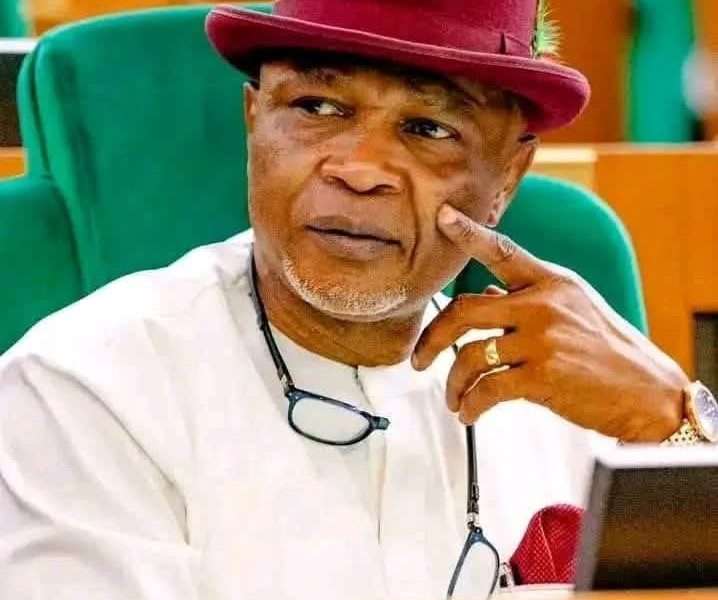

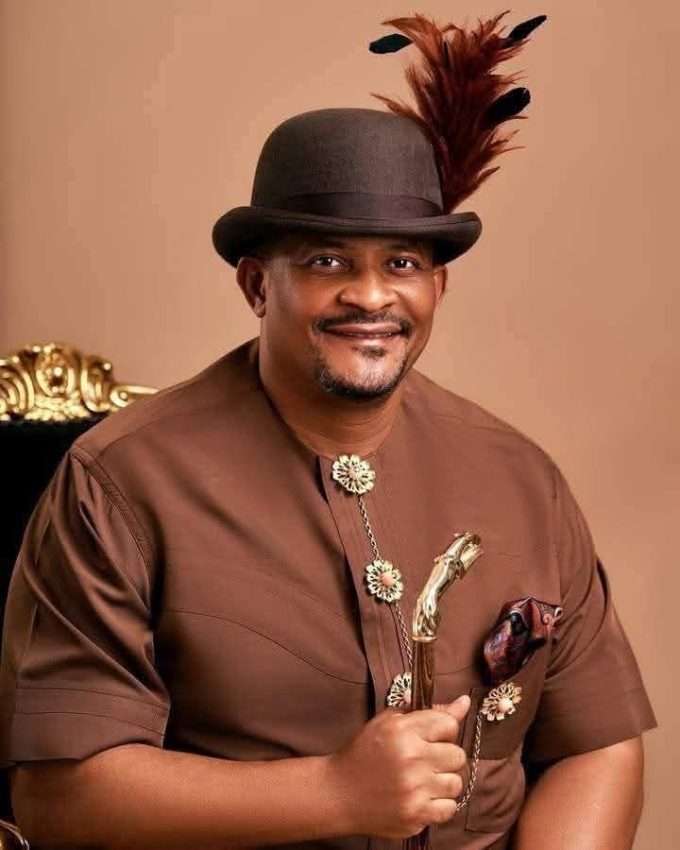
The Rivers State All Progressives Congress (APC) governorship candidate, Kingsley Chinda, has admitted that he and other members of the National Assembly were ignorant of the economic implications of fuel subsidy when they opposed its removal during the administration of former President Goodluck Jonathan.
Chinda, a member of the House of Representatives, said lawmakers who resisted the proposed policy were motivated by the belief that they were defending the interests of Nigerians but did not fully understand the economic consequences of retaining the subsidy.
He made the admission while speaking at the inauguration of the PBAT Door-to-Door Movement in Port Harcourt, Rivers State, in an event monitored by Africa Update on a live television broadcast.
Recalling the controversy surrounding Jonathan’s attempt to remove the fuel subsidy, Chinda said members of the House of Representatives, then led by Aminu Tambuwal as Speaker, had convened a parliamentary sitting on a Sunday to oppose the proposal.
“We were in a period of ignorance when we stood against fuel subsidy removal. We convened the parliament and sat on a Sunday with Aminu Tambuwal as the Speaker of the House of Representatives. We were all members of the PDP, and the President was PDP.
“But because we felt we were speaking for the people, that was why I said it was a period of ignorance. We stood against it. We didn’t know that there were those who were manipulated, those who were doing it for free, and Nigerians who believed that we were enjoying it for free,” he said.
Africa Update recalls that Jonathan’s attempt to remove the fuel subsidy in January 2012 triggered widespread protests across the country, following strong opposition from organised labour, civil society groups and opposition politicians. The protests, popularly known as Occupy Nigeria, forced the former President to partially reverse the decision.
However, President Bola Tinubu announced the removal of the fuel subsidy during his inauguration on May 29, 2023, describing it as a necessary step towards addressing the country’s economic challenges.
The policy has significantly altered Nigeria’s fiscal and economic landscape, increasing revenue available to the three tiers of government while also contributing to rising transportation costs, inflation and the cost-of-living crisis.
Defending the policy, Chinda described fuel subsidy as detrimental to Nigeria’s economic development, insisting that its removal was necessary to improve government revenue and provide resources for national development.
“Fuel subsidy is not just a scam. It is against the interests of this country. It is against the development of this country. It is against you and your future,” he said.
The APC governorship candidate recalled the financial difficulties faced by the country before the policy change, particularly the inability of several state governments to meet their salary obligations and the Federal Government’s reliance on borrowing to pay civil servants.
According to him, during his time in the National Assembly, the Federal Government frequently approached lawmakers for approval of loans to meet salary obligations.
He said lawmakers were initially reluctant to approve such requests because of concerns that funds borrowed for capital projects had allegedly been diverted or misappropriated.
“We were approving loans for capital projects, but most of the money was stolen and shared. And we had worked for this country, yet you could not approve a loan to pay us our salaries,” he recalled.
Chinda, however, said lawmakers eventually reconsidered their position and approved loans to enable the government to meet its obligations to workers.
He argued that the removal of the subsidy had improved revenue allocations to state and local governments, making the regular payment of salaries less challenging than in previous years.
“Today, all that is history. Salary is no longer a problem, both at the local government, state and federal levels. Why? Because you have more money to the states and more money to the local governments,” he said.
Acknowledging the economic hardships resulting from the reforms, Chinda urged Nigerians to remain patient, maintaining that the country was gradually recovering from its economic difficulties.
He cited Ghana and other countries as examples of nations that had undergone difficult economic adjustments before experiencing improvements.
“Things are not easy, but for every difficulty you face, just be rest assured that this country is gradually and slowly coming out of the abyss,” he added.
Chinda maintained that the reforms required courageous leadership, arguing that greater stability in the foreign exchange market would also improve business confidence by enabling investors to make more reliable financial and investment projections.






Leave a comment