


The Kalabari SE has restated its claim of ancestral ownership of Abonnema Wharf, now known as Nyemoni-Iwo-Ama, Njemanze and Elechi Beach, citing historical records, customary land rights and judicial precedents in a bid to counter claims attributed to neighbouring Okrika and Ikwerre communities.
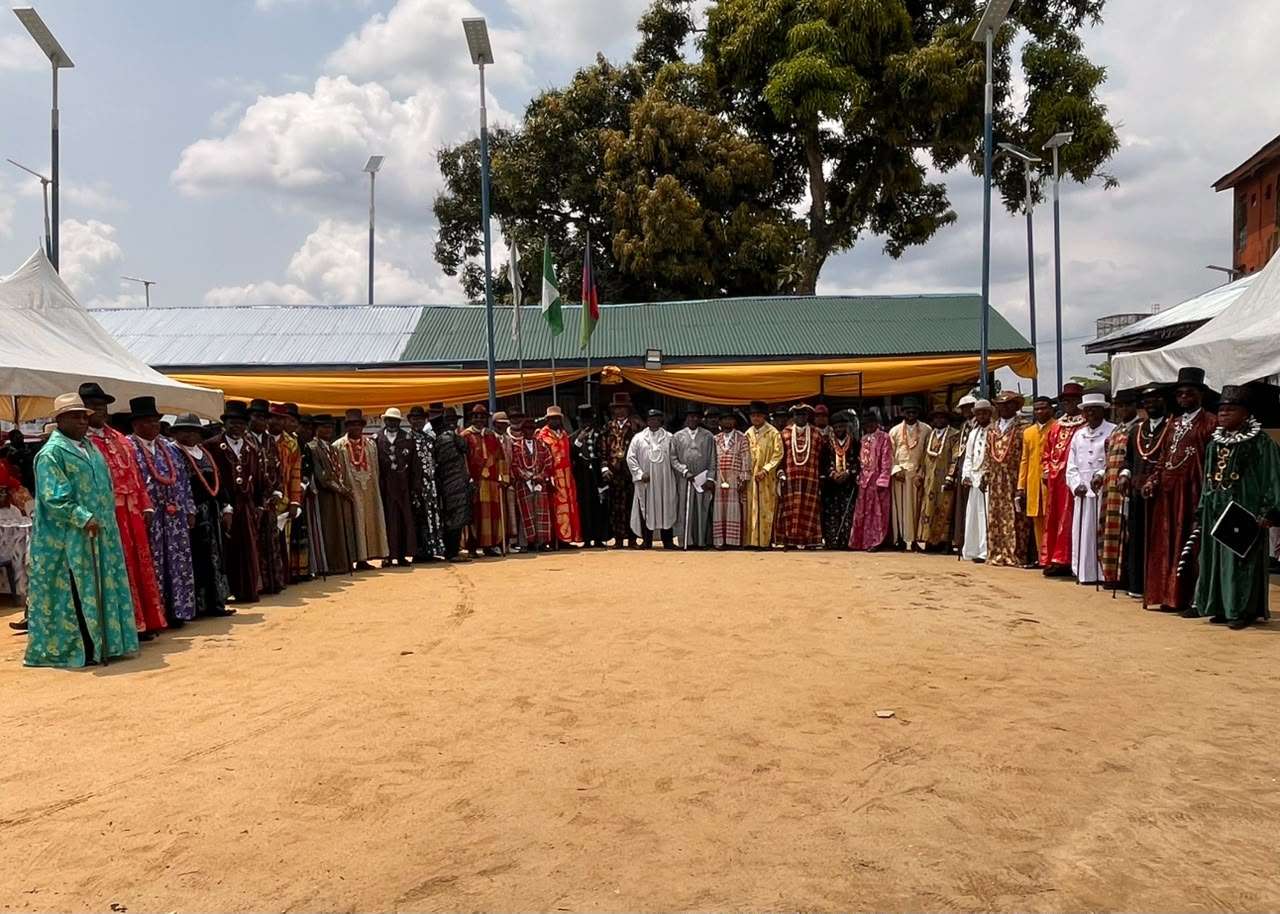
The group made its position known at a world press conference held at Nyemoni Iwo-Ama, Rivers State, on Wednesday, 28 October 2026, where it presented a statement titled “Rebalancing the Narrative: The Unassailable Historical and Legal Truth of Kalabari Ownership of Abonnema Wharf (Now Nyemoni-Iwo-Ama), Njemanze, and Elechi Beach.”
In the statement, the Kalabari SE said its intervention was intended to address what it described as historical distortions, legal misinterpretations and factual inaccuracies concerning the ownership of waterfront settlements in Port Harcourt.
The group maintained that the Kalabari people had occupied and exercised customary control over the relevant riverbanks and waterways long before the establishment of Port Harcourt in 1913.
According to the statement, the area now identified as Abonnema Wharf was historically known as Iwo-Ama and later referred to as Angala Pele-Poku. The group said the area extended from the present Magcobar area and its jetty through the NPA Wharf and Abonnema Wharf Jetty to Kidney Island, Njemanze and Elechi Beach.
It argued that the Kalabari people, traditionally associated with maritime trade and fishing, had established commercial activities along these waterfronts before the colonial development of Port Harcourt.
The group further contended that the acquisition of mainland areas for railway lines, warehouses, residential quarters and other public infrastructure in the early twentieth century did not include the contiguous waterfront settlements it claims as ancestral territory.
The Kalabari SE cited the historical trade in pit props mangrove timber used to support underground coal-mine workings as evidence of the area’s commercial significance to Kalabari traders.
It named Chief Kio Young-Jack, Chief Sokari George and Chief Berry Boyle among the Kalabari figures it said were involved in developing the area as a centre for gathering, processing and storing timber for transportation to coal-mining operations in Enugu.
The group also referenced the Eastern Region Gazette No. 38, Volume 14, dated 13 May 1965, particularly pages B129–B132, which it said identified the settlements associated with Abonnema Wharf as Angala Pele-Poku and described them as fishing ports, trading camps and settlements of the Kalabari Ijaw.
It argued that the gazette was an important documentary source for understanding the historical identity of the area and assessing competing ownership claims.
The statement also maintained that the name Angala Pele-Poku reflected the area’s traditional mangrove-timber trade and challenged neighbouring communities to produce historical records supporting their own claims of prior settlement and ownership.
A central part of the Kalabari SE’s argument concerns Supreme Court Suit No. 44/12, which it described as a landmark judgment recognising Kalabari control over the New Calabar River, the Port Harcourt River towards Nsokpo, and associated tributaries and riverbanks.
The group argued that the judgment should be considered alongside the Hargrove Agreement of 27 May 1913, which it said had been cited by its neighbours in support of claims involving the waterfronts.
According to the statement, the Kalabari people were not principal parties to the 1913 mainland land-sale agreement and therefore could not be deemed to have surrendered their separate customary interests merely because certain individuals signed or witnessed related documents.
It further argued that the Bakana chiefs who signed the agreement did not possess the authority, under Kalabari customary practice, to surrender territory on behalf of the entire Kalabari kingdom without the consent of the recognised traditional sovereign.
The Kalabari SE maintained that a subsequent agreement or administrative decision could not override an existing judicial determination. However, the precise scope and legal effect of the cited judgment, agreement and related records would require examination of the original documents and their applicability to the specific parcels of land in dispute.
The group also disputed what it described as its neighbours’ interpretation of the 1945 Commission of Inquiry, particularly arguments concerning the omission of Abonnema Wharf or Iwo-Ama from a list of 108 settlements discussed during earlier disputes.
It maintained that the omission did not amount to a relinquishment of ownership, arguing that the earlier litigation concerned specific locations where competing claims or alleged trespass had arisen rather than every settlement claimed by the Kalabari people.
The statement further contended that Kalabari representatives focused on broader territorial and trading rights during the inquiry, rather than listing every seasonal fishing settlement.
It cited evidence relating to the historical collection of comey, payments associated with trade and access to waterways as further support for its position that the Kalabari exercised authority over important commercial routes in the Niger Delta.
The group argued that such payments reflected the recognition of traditional authority and control over trade. It also referred to testimony and exhibits from the historical proceedings, which it said supported Kalabari claims over rivers, creeks, tributaries and adjoining banks.
On the legal position, the Kalabari SE invoked customary land rights, long possession and principles relating to delay in pursuing legal claims.
It questioned why, in its view, competing communities had not instituted legal proceedings over the disputed waterfronts earlier if they considered themselves the rightful owners.
The group also referred to the Rivers State Limitation Law, asserting that claims to recover land could be barred after a specified period. It maintained that the history of occupation, development and customary use of the settlements should be considered in evaluating competing claims.
The applicability of limitation rules, including any exceptions and the legal consequences of particular forms of possession, would depend on the facts of each case and the relevant statutory provisions.
The statement further referred to the demolition of waterfront communities during the administration of former Governor Rotimi Amaechi. It said Kalabari chiefs, community leaders and organisations had challenged the demolition through legal channels, presenting this as evidence of their longstanding interest in the affected areas.
The Kalabari SE also rejected an account attributed to its Okrika neighbours concerning the historical status of Bakana.
According to the group, the Decretal Order of 8 July 1881, including an addendum titled “Braide’s Palaver,” recorded that Chief Will-Braide, who was established at Banabupoku, now Bakana, should be regarded as having returned to New Calabar, or Kalabari country.
The group interpreted the record as recognition that Bakana was already within Kalabari territory before the 1881 settlement, rather than land newly granted to the Kalabari people through arbitration.
It maintained that this historical account supported its broader argument that Kalabari settlements along the waterways had developed through longstanding occupation and were geographically connected.
Concluding its statement, the Kalabari SE called on the Okrika and Ikwerre communities to pursue an evidence-based discussion of the disputed waterfronts and avoid using historical disagreements to deepen ethnic divisions.
It said Rivers State had been shaped by the contributions, commercial exchanges and shared experiences of its diverse communities, adding that disputes over ancestral land should be addressed through historical research, documentary evidence and lawful processes.
The group reiterated its claim to Nyemoni-Iwo-Ama, Magcobar, Njemanze, Elechi Creek and Primrose Creek, and pledged to continue defending what it described as its ancestral heritage through legal and historical channels.
The statement was signed on behalf of the Kalabari SE by Engr. Chf. Okiye Evans Ala-Ame, Committee Chairman; Alabo Moses Benibo, Committee Secretary; and Alabo Kingsley Young-Jack Igodo, Lead Researcher and Committee Member.
Other members of the committee listed were Alabo Prince Tamunogbeba Quincy, PhD; Alabo Konteinbo-ofori Mike Amachree; Se-Alabo (Barr.) Igbgikonte Samuel-Suku; Alabo Daerefa Christopher Braide; and Alabo Damiete Evans.













Leave a comment