
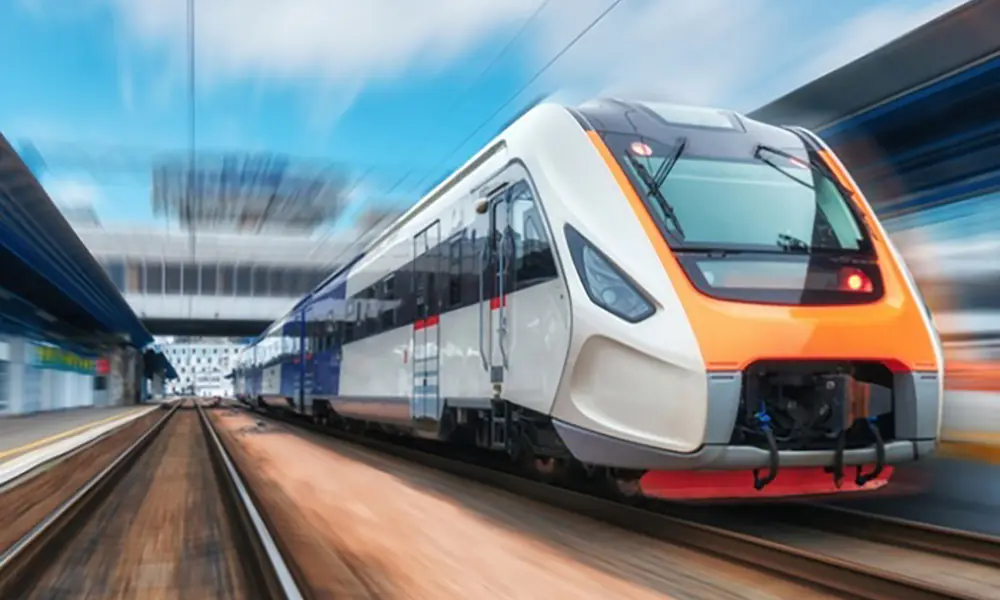

Egypt is developing an $8.7 billion electrified high-speed railway network to provide an alternative route for global cargo movement, following security disruptions in the Red Sea that exposed the vulnerability of its dependence on the Suez Canal.
For more than a century, the Suez Canal has served as one of Egypt’s most important economic assets and a vital artery for international commerce, handling approximately 12 per cent of global maritime trade.
However, recent security threats in the Red Sea have forced shipping companies to divert vessels around the Cape of Good Hope, increasing transit times and transportation costs while disrupting global supply chains. The diversions have also reduced shipping traffic through the canal, putting pressure on Egypt’s revenue from transit fees.
In response, Cairo is investing in an extensive transport and logistics network designed to provide trading partners with alternative ways to move goods between the Red Sea and the Mediterranean.
Egyptian Minister of Economy and Planning, Ahmed Rostom, said the government had invested heavily in roads, ports and railways to strengthen the country’s position as a regional logistics hub and give international trading partners greater flexibility.
“We’ve invested heavily in our infrastructure, be it roads, be it ports, as well as railroads, to give options to our trading partners to mobilise their merchandise and to move their merchandise across Egypt,” Rostom said.
He explained that cargo could be transported through the Suez Canal or moved across Egypt using the country’s infrastructure network to reach Mediterranean ports and gain access to European markets.
At the centre of the strategy is the Suez Canal Economic Zone, which has attracted more than $16 billion in investment, reflecting Egypt’s ambition to expand its industrial, commercial and logistics capabilities.
A key component of the initiative is an electrified high-speed railway stretching approximately 2,000 kilometres across the country. The project, valued at $8.7 billion, is designed to connect ports along the Red Sea with export terminals on the Mediterranean coast.
Dubbed the “Suez Canal on Rails”, the network is expected to carry up to 13 million tonnes of freight annually when fully operational.
By transferring containers and other goods between the two coastlines by rail, Egypt aims to provide shipping companies and cargo operators with an additional transport option that could reduce dependence on vulnerable maritime routes and ease pressure on international supply chains.
Rostom said Egypt had committed substantial resources to improving logistics infrastructure and creating opportunities for private-sector participation in logistics hubs along the canal corridor.
He added that the government’s objective was to make the movement of goods more efficient and seamless, strengthening Egypt’s capacity to facilitate international trade.
Beyond protecting its own economic interests, Egypt hopes the infrastructure investments will support broader African economic integration.
The African Continental Free Trade Area (AfCFTA), which seeks to create a single continental market for goods and services, offers opportunities for improved transport connections between North Africa and markets across East and sub-Saharan Africa.
Egypt’s expanding network of ports, railways and logistics facilities could help strengthen these connections by linking regional trade corridors with Mediterranean shipping routes and European markets.
The strategy could also attract additional investment in manufacturing, warehousing, freight handling and other logistics-related activities, creating opportunities for economic growth beyond traditional canal transit revenues.
Nevertheless, the railway’s ability to transform regional trade will depend on its operational capacity, freight costs, connections with ports and the efficiency of cross-border transport arrangements.
For Egypt, the project represents a strategic effort to turn the risks exposed by Red Sea disruptions into an opportunity to diversify its transport infrastructure, strengthen its economic resilience and reinforce its role as a gateway between Africa, Asia and Europe.
As global shipping companies seek more resilient supply chains, Egypt is positioning its rail and logistics network as a complementary route to the Suez Canal, rather than relying exclusively on maritime transit to sustain its influence in international trade.











Leave a comment