
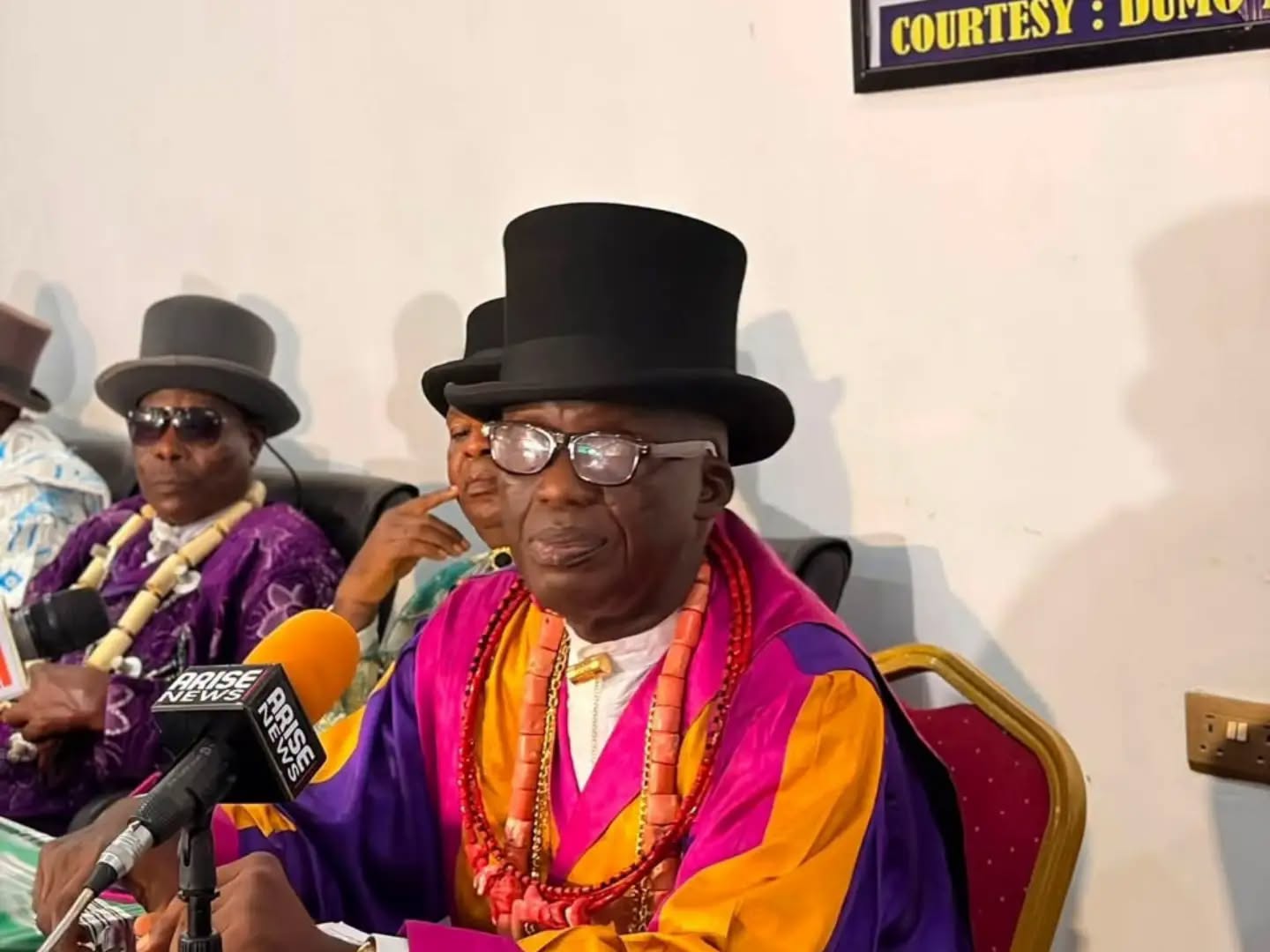

The Obuama Community in Degema Local Government Area of Rivers State has rejected claims contained in a September 7, 2026 statement issued by the Udekama (Degema) people concerning the longstanding land dispute between Obuama and Usokun communities.
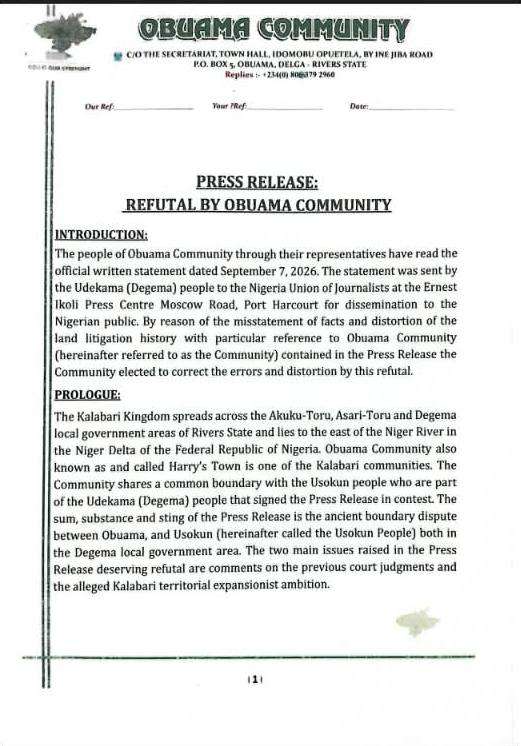
In a detailed rebuttal titled “Refutal by Obuama Community,” the community disputed assertions concerning the history and ownership of the disputed Obupiri land, describing portions of the Udekama statement as misstatements of fact and distortions of the history of litigation between the communities.
Obuama said it was compelled to respond in order to clarify its position, particularly regarding the history of the land dispute and a series of court proceedings dating back to 1935.
According to the community, Obuama, also known as Harry’s Town, is a Kalabari community in Degema Local Government Area and shares a boundary with Usokun, which it described as part of the Udekama (Degema) people.
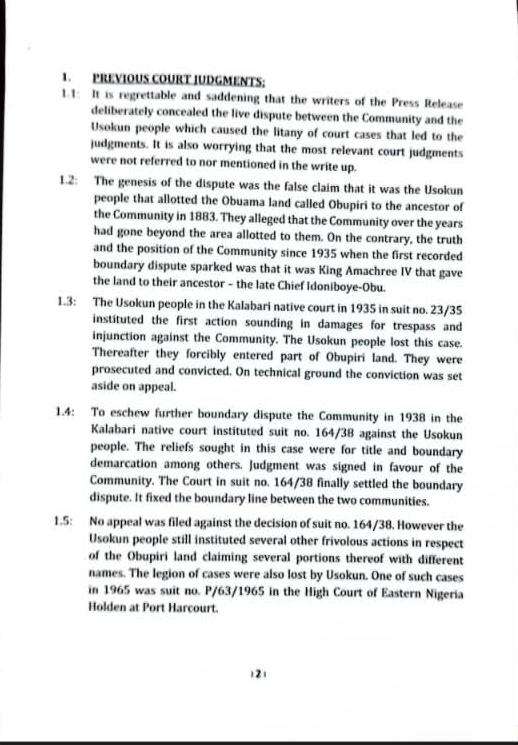
The community disputed the claim that the Usokun people allotted the Obupiri land to an ancestor of Obuama in 1883. It maintained that its position since the first recorded boundary dispute in 1935 had been that King Amachree IV gave the land to its ancestor, the late Chief Idoniboye-Obu.
Obuama cited Kalabari Native Court Suit No. 23/35, instituted by the Usokun people in 1935, as the first recorded action in the dispute.
The community said the suit involved claims for damages for trespass and an injunction against Obuama, and maintained that Usokun lost the case.
It further alleged that the Usokun people subsequently entered part of the Obupiri land, resulting in prosecution and conviction, although the conviction was later set aside on appeal on a technical ground.
According to Obuama, efforts to resolve the boundary dispute subsequently led to Suit No. 164/38, instituted before the Kalabari Native Court in 1938.
The community said the case sought, among other reliefs, a declaration of title and demarcation of the boundary between the two communities.
It maintained that judgment was delivered in its favour and that the court fixed the boundary between Obuama and Usokun. Obuama further stated that no appeal was filed against the decision in Suit No. 164/38.
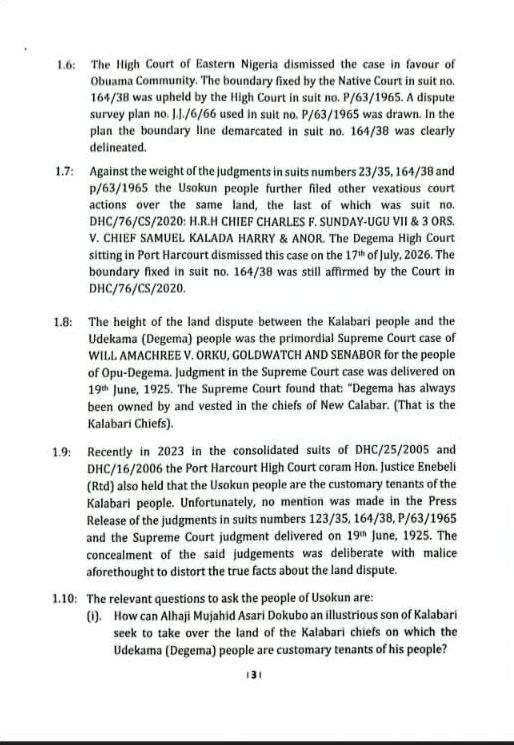
The community also referred to subsequent litigation over portions of the disputed territory, including Suit No. P/63/1965, heard at the High Court of Eastern Nigeria sitting in Port Harcourt.
Obuama said its account of the dispute was supported by a broader history of judicial proceedings, referencing the 1938 Kalabari Native Court judgment, the 1965 High Court judgment and a 2026 ruling of the Degema High Court.
It also cited the 1925 Supreme Court judgment in Will Amachree v. Orku, Goldwatch and Senabor, alongside other court proceedings, in presenting its position on the historical relationship between the Kalabari people and Udekama communities.
The community maintained that the judicial history it cited should be taken into consideration in any discussion concerning the ownership and boundary of the disputed land.
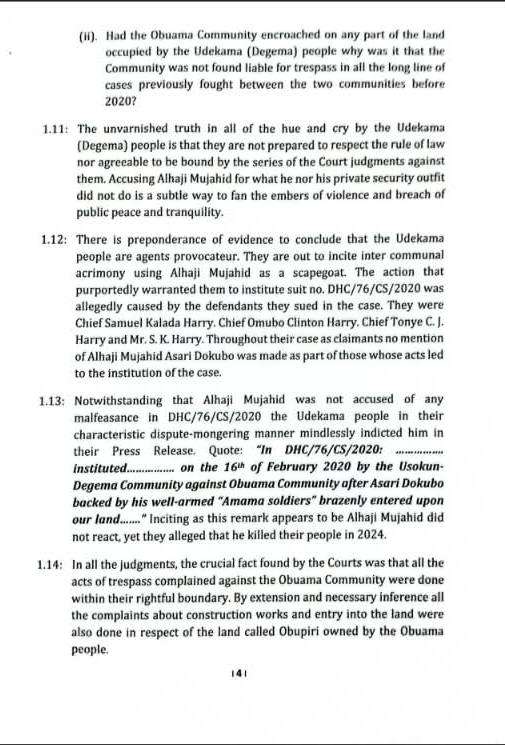
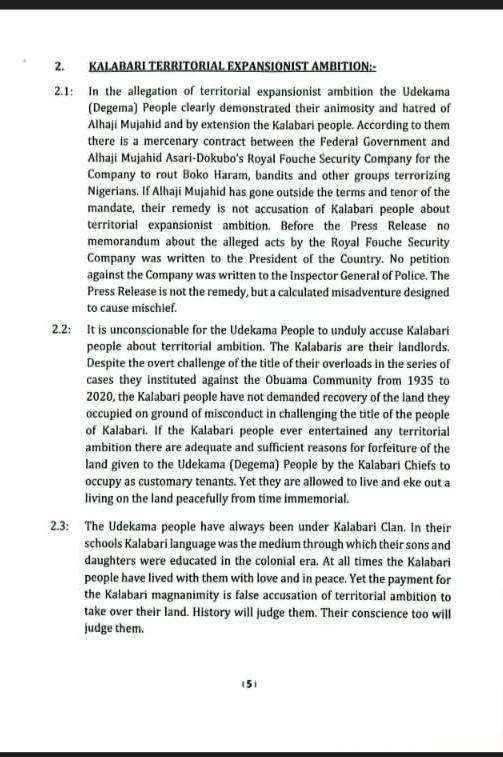
Obuama also rejected what it described as allegations of a Kalabari territorial expansionist agenda, arguing that such a characterisation misrepresented its position and could heighten tensions between the communities.
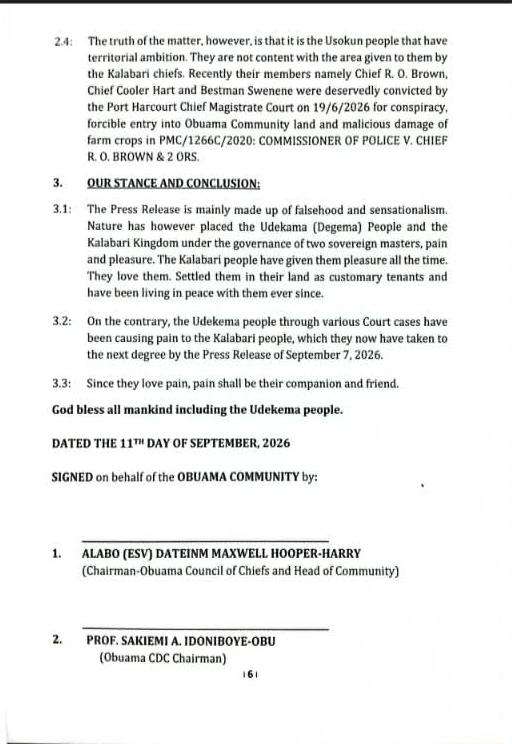
The community called for respect for existing court decisions and urged all parties to pursue the longstanding dispute through lawful, peaceful and constructive means.
It cautioned against public accusations that could further strain relations between the affected communities, while advocating dialogue and peaceful resolution of outstanding issues.
Obuama said its latest statement was intended to clarify its position on the dispute, place the relevant judicial history on record and promote peaceful coexistence between the communities.
Below is a copy of the press statement released by the Obuama Council of Chiefs:










Leave a comment