
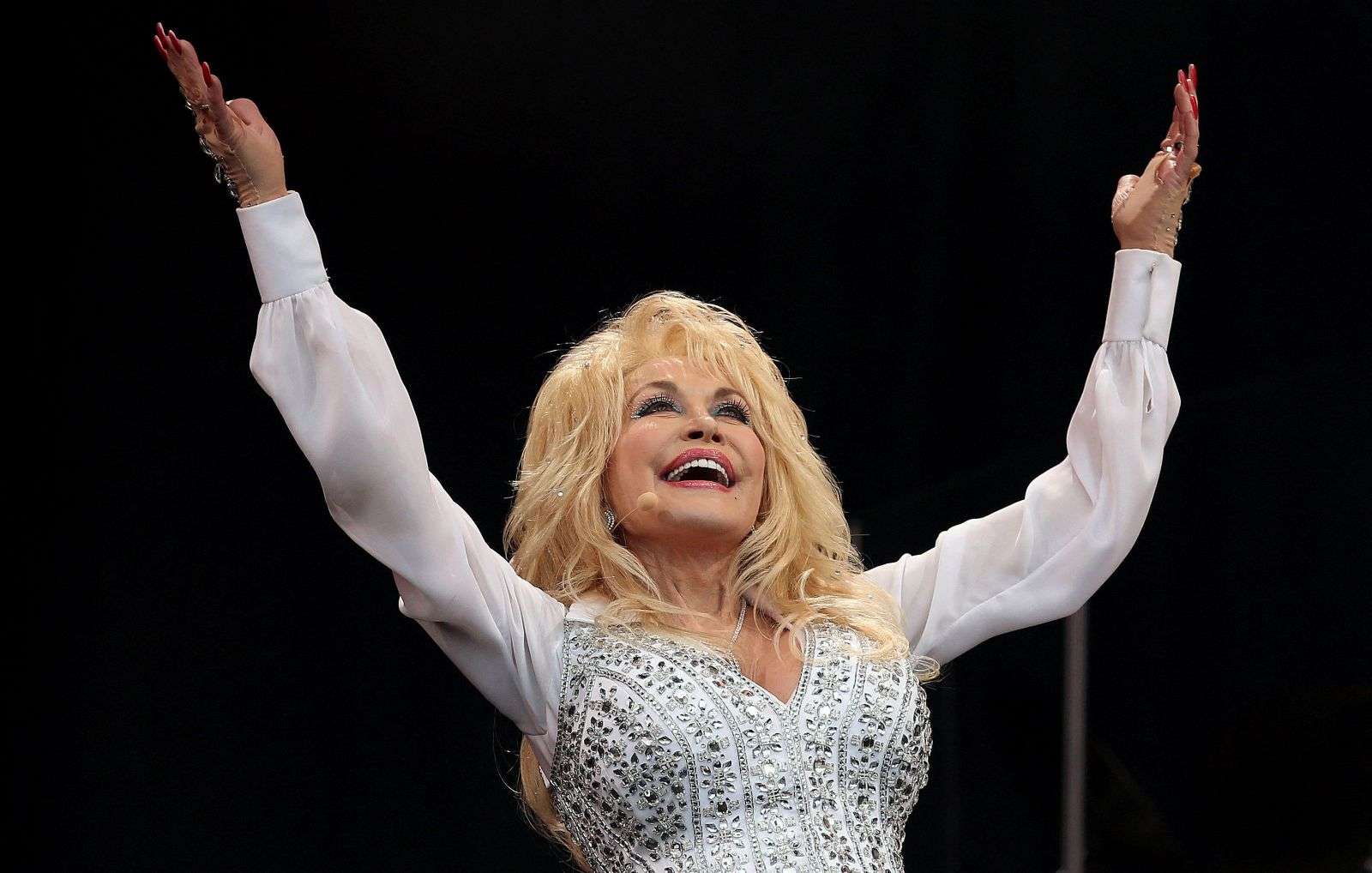

Country music icon, singer-songwriter and philanthropist Dolly Parton has died at the age of 80, bringing to an end a remarkable career that spanned more than six decades and made her one of the most influential figures in American popular culture.
Parton’s death was announced on Tuesday by her nephew, Bryan Seaver, in an emotional video posted on Instagram. Seaver, who served as Parton’s head of security for more than two decades, said the announcement was one the singer had asked him to make years earlier. He described the moment as one marked by “absolute pride and great sadness”.
Parton’s representatives later confirmed that she had died at the Vanderbilt-Ingram Cancer Center after a brief battle with cancer, surrounded by loved ones. Her death followed months of health concerns that had forced her to postpone performances and withdraw from several public engagements.
Born on January 19, 1946, in rural Tennessee, Parton was the fourth of 12 children raised in a poor family. She grew up in a two-room log cabin and later described her childhood as “dirt poor”. Her father, a sharecropper who eventually became a small tobacco farmer, was unable to read or write, while her mother passed on a love of traditional folk music and ballads.
Music became an important part of Parton’s life from childhood. By the age of 13, she had appeared on local radio and television in East Tennessee, performed at the Grand Ole Opry in Nashville and recorded her first single, Puppy Love.
After graduating from high school in 1964, Parton moved to Nashville the following day to pursue a career in music. She released her debut album, Hello, I’m Dolly, in 1967 and joined The Porter Wagoner Show, where established country star Porter Wagoner became her mentor and professional collaborator.
Parton eventually embarked on a solo career and transformed her personal experiences into some of the most enduring songs in popular music. In 1973, she wrote I Will Always Love You following her professional separation from Wagoner. The song became a major hit for Parton before gaining even greater international recognition when Whitney Houston recorded it for the 1992 film The Bodyguard.
Around the same period, Parton wrote Jolene, another defining composition that became one of the most recognisable songs in country music. Her 1974 album of the same name helped establish her as a major star beyond the traditional country audience.
Her commercial breakthrough continued with the 1977 album Here You Come Again, which became her first million-selling album and earned her first Grammy Award. Over the course of her career, she sold more than 100 million records worldwide and wrote more than 3,000 songs. She won 11 Grammy Awards and recorded numerous chart successes, earning her the enduring title of the “Queen of Country”.
Parton also achieved considerable success on the big screen. She made her film debut in 1980 alongside Jane Fonda and Lily Tomlin in the workplace comedy 9 to 5. She wrote and performed the film’s title song, which became a major international hit and earned an Academy Award nomination for Best Original Song.
Her subsequent film credits included The Best Little Whorehouse in Texas (1982), Steel Magnolias (1989) and Joyful Noise (2012), further establishing her reputation as an entertainer whose influence extended well beyond music.
Away from the stage and screen, Parton built a successful business empire. Among her most notable ventures was Dollywood, the Tennessee theme park that became closely associated with her name and her home state.
Yet, perhaps equally significant was Parton’s philanthropic legacy. Through the Dollywood Foundation’s Imagination Library, she established a programme dedicated to promoting childhood literacy by providing free books to children. The initiative has distributed hundreds of millions of books to children around the world.
Parton also supported medical research, disaster relief, literacy initiatives and other charitable causes. She donated $1 million towards COVID-19 vaccine research, contributing to the development of the Moderna vaccine. In 2022, she received the Carnegie Medal of Philanthropy in recognition of her humanitarian work.
“I just give from my heart,” Parton said when discussing her approach to philanthropy. “I never know what I’m going to do or why I’m gonna do it. I just see a need and if I can fill it, then I will.”
Her generosity became one of the defining features of a public image built on warmth, humour and humility, even as she became one of the world’s most successful entertainers.
Parton’s health challenges became increasingly public from September 2025, when she postponed her Las Vegas residency. She subsequently cancelled or missed a number of public appearances as she dealt with ongoing health problems. Shortly before her death, she withdrew from an appearance connected with a new Dollywood attraction after experiencing dizziness and dehydration.
Her death also comes just months after the passing of her husband, Carl Dean, whom she married in 1966. Dean died in March 2025 at the age of 82, bringing an end to a marriage that lasted nearly six decades.
Parton leaves behind a legacy that extends far beyond her record sales and awards. From a modest childhood in Tennessee, she rose to become a globally recognised singer, songwriter, actress, entrepreneur and philanthropist whose work crossed generations and cultural boundaries.
Her songs became standards, her films became popular classics, and her charitable efforts touched millions of lives. For generations of admirers around the world, Dolly Parton will remain the distinctive voice, songwriter and humanitarian who turned humble beginnings into an extraordinary life of music, service and enduring influence.









Leave a comment