
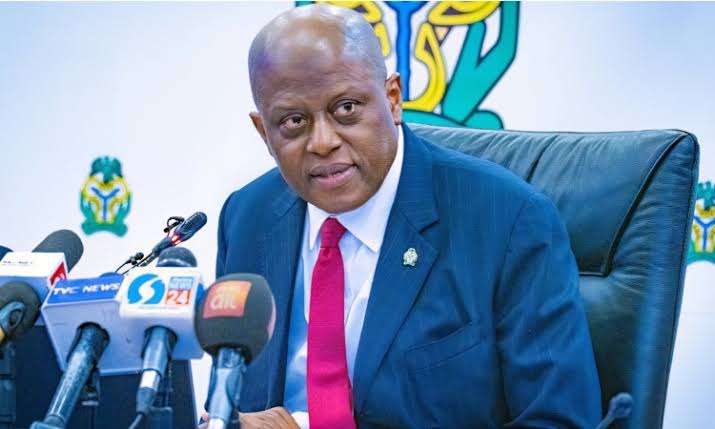

The Central Bank of Nigeria (CBN) has revoked the operating licences of 46 microfinance banks across the country for failing to meet the regulatory requirements necessary for continued operation.
The apex bank announced the decision in a statement issued on Wednesday by its Acting Director of Corporate Communications, Mrs Hakama Sidi-Ali, stating that the revocation took effect from 1 July 2026 following the approval of the Governor of the Central Bank of Nigeria, Mr Olayemi Cardoso.
According to the CBN, the action was taken pursuant to the powers conferred on the Bank under Sections 12 and 13 of the Banks and Other Financial Institutions Act (BOFIA), 2020.
“The Central Bank of Nigeria has revoked the operating licences of forty-six (46) Microfinance Banks with effect from 1 July 2026, in accordance with its powers under Sections 12 and 13 of the Banks and Other Financial Institutions Act (BOFIA), 2020,” the statement read.
The regulator explained that the affected institutions failed to satisfy key prudential and regulatory conditions required to continue operating as licensed financial institutions.
“The revocation was approved by the Governor of the Central Bank of Nigeria, Mr Olayemi Cardoso, following the banks’ failure to meet the regulatory requirements for continued operation as licensed financial institutions,” it added.
Reasons for the Licence Revocation
The CBN stated that supervisory examinations established one or more regulatory infractions against the affected institutions, necessitating the withdrawal of their operating licences.
According to the apex bank, the breaches included insufficient assets to meet liabilities, closure of operations without prior regulatory approval, prolonged inactivity and cessation of financial intermediation, failure to commence operations within 12 months of obtaining operating licences, and failure to maintain the prescribed minimum capital unimpaired by accumulated losses.
The regulator noted that the decision forms part of its ongoing efforts to strengthen financial sector stability, protect depositors, and ensure strict compliance with banking laws and prudential regulations.
“The revocation of the licences is part of the Bank’s ongoing efforts to safeguard the stability of the financial sector, protect depositors, and ensure that licensed institutions comply with current laws and regulatory requirements,” the statement said.
Reaffirming its commitment to a sound financial system, the CBN said it would continue to deploy appropriate supervisory and enforcement measures to preserve public confidence in Nigeria’s banking industry.
“The Central Bank of Nigeria remains committed to promoting a safe, sound and resilient financial system and will continue to take appropriate supervisory and regulatory actions, where necessary, to maintain public confidence in the Nigerian financial system,” the statement added.
Banks Across 20 States Affected
The affected institutions comprise Tier 1, Tier 2 and State microfinance banks operating across several states, including Lagos, Kano, the Federal Capital Territory (FCT), Abia, Ogun, Kaduna, Niger, Plateau, Rivers, Bayelsa, Benue, Cross River, Delta, Kebbi, Kwara, Ondo, Osun, Oyo and Anambra.
Among the notable institutions whose licences were revoked are Gold Microfinance Bank, Creditville Microfinance Bank, Supreme Microfinance Bank, Winview Microfinance Bank, Merchant Microfinance Bank, Safegate Microfinance Bank, and NOW NOW Digital Microfinance Bank.
Kano State recorded the highest number of affected institutions, with 13 microfinance banks, followed by Lagos State with eight.
By category, 25 of the affected institutions are Tier 2 microfinance banks, 18 are Tier 1 microfinance banks, while three are State microfinance banks.
Full List of Revoked Microfinance Banks
The 46 affected institutions are:
- Minji-Se Churchill Microfinance Bank – Rivers
- Merchant Microfinance Bank – Abia
- Janmaa Microfinance Bank – Kwara
- Busu Microfinance Bank – Niger
- Gold Microfinance Bank – Lagos
- Zain Microfinance Bank (formerly Dawakin Tofa MFB) – Kano
- Bompai Microfinance Bank – Kano
- Ajwa Microfinance Bank (formerly Gezawa MFB) – Kano
- NOW NOW Digital Microfinance Bank – Kano
- Crystabel Microfinance Bank – Bayelsa
- Chanelle Microfinance Bank – Lagos
- Abia SME Microfinance Bank – Abia
- Kamba Microfinance Bank – Kebbi
- Iwade Microfinance Bank – Ogun
- Winview Microfinance Bank – FCT
- Zuru Microfinance Bank – Kebbi
- Minjibir Microfinance Bank – Kano
- Shanono Microfinance Bank – Kano
- Sumaila Microfinance Bank – Kano
- Rimin Gado Microfinance Bank – Kano
- Mwaghavul Microfinance Bank – Plateau
- Sycamore Microfinance Bank – Kano
- TOFA Microfinance Bank – Kano
- Safegate Microfinance Bank – Lagos
- Creekline Microfinance Bank – Delta
- Bestar Microfinance Bank – Oyo
- Livingspring Microfinance Bank – Cross River
- Apple Microfinance Bank – Ogun
- Stanford Microfinance Bank – Akwa Ibom
- Frontline Microfinance Bank – Anambra
- Zafec Microfinance Bank – Kaduna
- Supreme Microfinance Bank – Lagos
- Bejin-Doko Microfinance Bank – Niger
- Kanopoly Microfinance Bank – Kano
- Bellbank Microfinance Bank (formerly Tsanyawa MFB) – Kano
- Yeneng Microfinance Bank – Plateau
- Creditville Microfinance Bank – Lagos
- MBAG Microfinance Bank – Lagos
- Straight Sahara Microfinance Bank – Benue
- OurPass Microfinance Bank – Ondo
- Verdant Microfinance Bank – Lagos
- Basawa Microfinance Bank – Kaduna
- Casha Microfinance Bank – FCT
- Esteem Microfinance Bank – Kano
- Entrepreneur Microfinance Bank – Lagos
- Avantus Microfinance Bank – Osun
NDIC Assures Depositors of Protection
The development comes amid assurances from the Nigeria Deposit Insurance Corporation (NDIC) that depositors remain adequately protected against bank failures.
The Managing Director and Chief Executive Officer of the NDIC, Mr Thompson Sunday, recently disclosed during the second-quarter 2026 Citizens and Stakeholders’ Engagement Session organised by the Federal Ministry of Finance in Abuja that more than 281 million depositors across Nigeria’s banking system are covered by deposit insurance.
According to him, the Corporation currently provides deposit insurance protection for 914 licensed financial institutions, with more than 98 per cent of depositors fully insured for the entirety of their deposits following the upward review of deposit insurance coverage limits in May 2024.
The CBN’s latest regulatory action underscores its determination to strengthen oversight of the microfinance banking sector, enforce prudential standards, and maintain the stability and resilience of Nigeria’s financial system.












Leave a comment